
The bathroom is often one of the smallest rooms in a house, yet it holds unparalleled influence over your daily routine and your home's total property value. An outdated, cramped, or deteriorating bathroom is not only a frustrating way to start your morning. It can also act as a massive red flag to potential home buyers inspecting your property.
Whether you are dealing with cracked floor tiles, insufficient vanity lighting, chronically leaking fixtures, or mold that refuses to wipe away permanently, you cannot ignore these issues. Moisture damage acts fast. A strategic bathroom remodel is one of the smartest, most protective investments a homeowner can make in 2026.
If your bathroom is showing signs of serious structural wear, such as soft, spongy spots in the subfloor around the bathtub, it is time to take immediate action. Letting water rot your floor joists will cost you thousands in future repairs. If you are ready to stop the damage and explore your design options, you can get matched with top local bathroom remodeling experts today and start drafting your new space.
In this comprehensive, data-driven guide, we will break down the top design trends dominating the remodeling space in 2026. We will explore the harsh realities of DIY versus hiring a professional, provide a highly granular cost breakdown by scale, and guide you through exactly how to hire a reliable contractor who respects both your vision and your budget.
1. Top Bathroom Remodeling Trends for 2026
The interior design landscape is evolving rapidly. While clean, timeless looks are always popular, 2026 is seeing a massive surge in highly customized features aimed at deep relaxation and long-term convenience. Understanding these current trends helps you make choices that keep your home competitive on the real estate market.
The Rise of the Spa-Like Wet Room
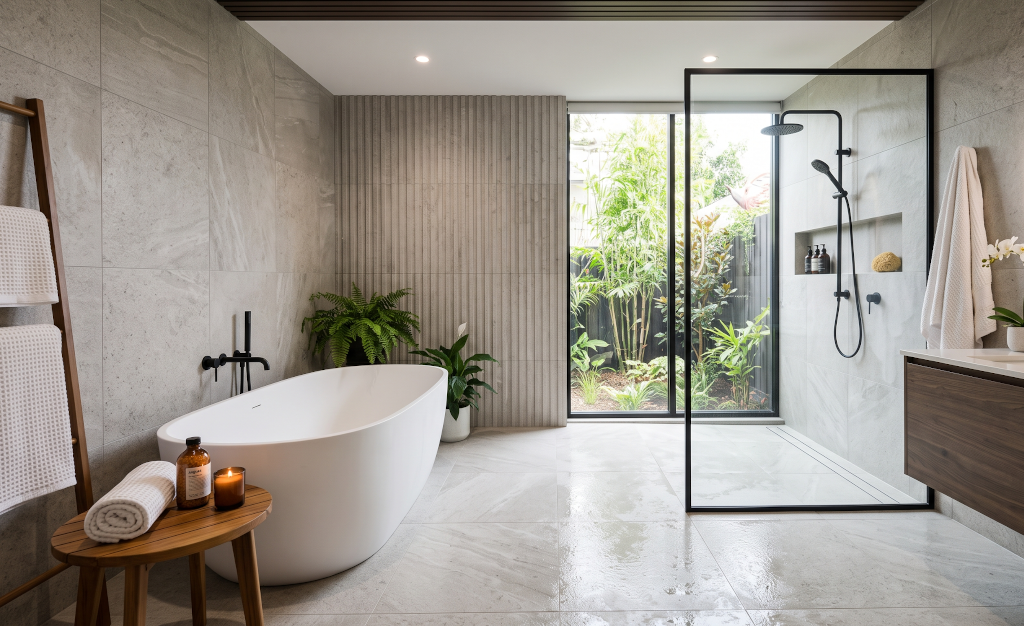
The traditional tub-and-shower combo is rapidly losing favor in modern master en-suites. Instead, homeowners are overwhelmingly opting for "wet rooms." This is an open-concept design where a freestanding soaking tub is situated within the exact same vast, fully tiled enclosure as the shower head.
This design choice maximizes spatial efficiency while creating a stunning, high-end focal point. It removes bulky shower doors and visually expands the footprint, making a standard-sized bathroom feel significantly larger and much more luxurious.
Seamless Smart Tech Integration
Technology is moving aggressively from the living room directly into the bathroom. In 2026, there is a massive demand for invisible technology that heavily enhances comfort without adding any visual clutter to the vanity.
- Radiant Heated Floors: These systems are now controlled via smartphone apps, ensuring you never step onto freezing tile on a cold winter morning.
- Smart Mirrors: Modern mirrors feature integrated, adjustable LED task lighting that perfectly mimics natural daylight, coupled with automatic anti-fog heating elements.
- Digital Shower Controls: These systems allow you to set your exact preferred water temperature and flow rate with the push of a button before you even step inside.
Aging-in-Place and Universal Design
A major focus of modern remodeling is "universal design." This concept centers on creating spaces that are highly accessible to everyone, regardless of age or mobility level, without looking like a clinical hospital room.
Curbless walk-in showers, subtly reinforced walls ready for future grab bars, and slightly elevated comfort-height toilets are becoming standard baseline inclusions. Not only does this heavily future-proof the home for your own retirement, but it drastically broadens the appeal to older buyers should you ever list the property for sale.
2. Choosing the Right Materials: Moisture-Resistant Flooring, Tile, and Fixtures
The bathroom is the single harshest environment in your home. It experiences rapid, extreme fluctuations in humidity and temperature daily. Selecting the correct, highly durable materials is just as important as the visual design itself.
Flooring: Luxury Vinyl Plank vs. Ceramic Tile
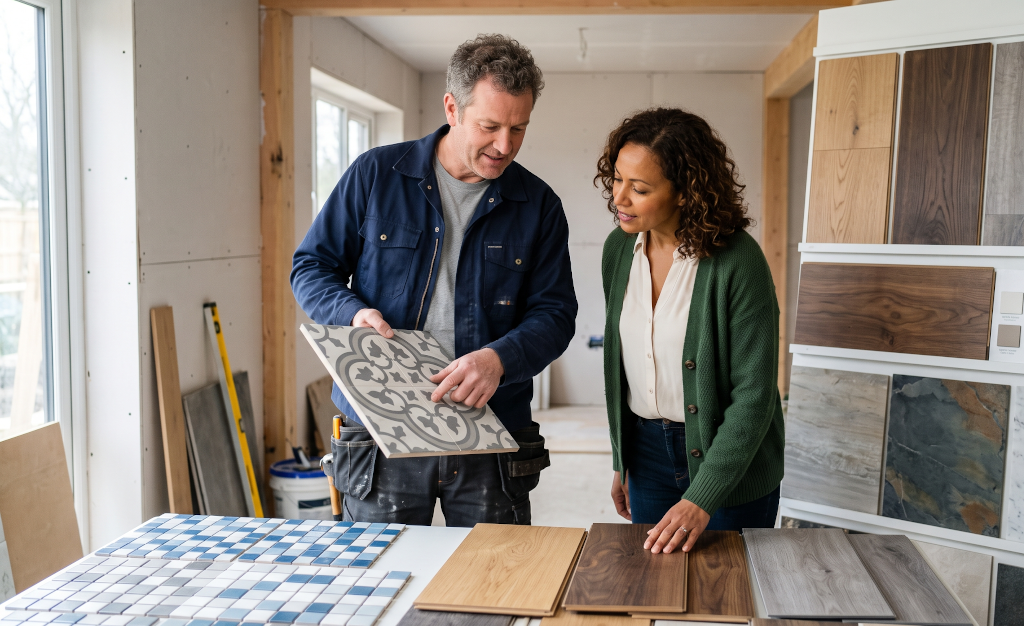
For decades, ceramic or porcelain tile was the only acceptable choice for a bathroom floor. While porcelain remains incredibly durable and waterproof, Luxury Vinyl Plank (LVP) has entirely disrupted the market in 2026. High-end LVP is 100% waterproof, softer underfoot than stone, and successfully mimics the exact look of real hardwood without the risk of warping.
If you prefer a natural aesthetic, natural stone like slate or marble offers unparalleled beauty. However, natural stone is highly porous. It requires strict annual sealing to prevent harsh water stains and permanent cosmetic damage from spilled shampoos.
Shower Enclosures: Large Format Tile vs. Acrylic Surrounds
Large-format porcelain tiles (such as 12x24 inch slabs) are heavily trending for shower walls. Larger tiles mean significantly fewer grout lines. Fewer grout lines drastically reduce the surface area where mold and mildew can physically attach, cutting your weekly cleaning time in half.
If you are on a tighter budget, modern acrylic or fiberglass shower surrounds have improved massively. They are molded seamlessly, meaning they have zero grout lines and pose almost no risk of water penetrating the drywall behind them.
Vanity Countertops: Quartz is King
When selecting a vanity countertop, engineered Quartz is the undisputed top choice for 2026. Unlike natural granite, Quartz is non-porous and does not require regular chemical sealing. It easily resists stains from spilled cosmetics, toothpaste, and harsh cleaning chemicals, making it ideal for high-traffic family bathrooms.

3. DIY vs. Professional Bathroom Remodeling
With endless home improvement shows and online video tutorials readily available, the temptation to tackle a bathroom remodel yourself is strong. However, the bathroom is arguably the most dangerous and unforgiving room in the entire house for an amateur DIYer.
When DIY is Appropriate (The Safe Zone)
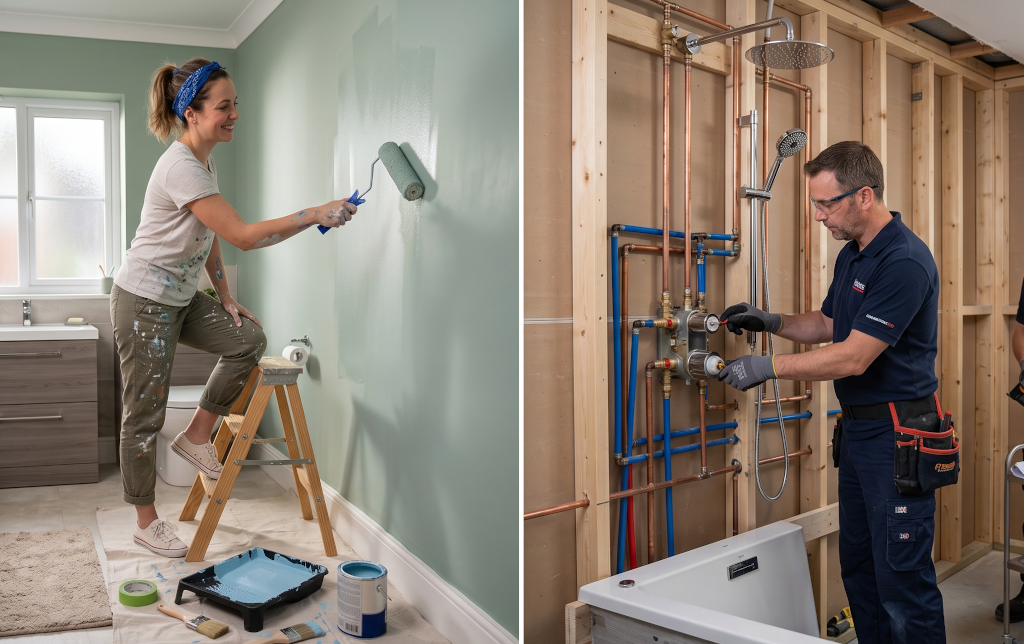
If you are simply looking for a weekend "facelift," there are several highly impactful projects that a motivated DIYer can safely handle without risking the home's structure.
- Painting: Applying a fresh coat of moisture-resistant, semi-gloss paint is a low-risk, high-reward visual upgrade.
- Hardware Swaps: Changing out cabinet drawer pulls, towel bars, and shower curtain rods instantly modernizes a stale room.
- Upgrading the Vanity (No Plumbing Moved): If you are completely comfortable shutting off the water supply lines safely, swapping a basic vanity and dropping a new sink into the exact same location is achievable.
The Hidden Dangers of Major DIY Renovations
The moment you step beyond simple cosmetics and begin moving pipes, the risks multiply exponentially. Attempting major plumbing or electrical work without a license can lead to disastrous financial consequences.
- Catastrophic Water Damage: A poorly sealed shower pan or an improperly soldered copper pipe hidden behind the drywall will cause silent, devastating rot. By the time you notice a brown water stain on the living room ceiling below, the structural damage is already in the thousands.
- Code Violations and Electrical Hazards: Bathrooms strictly require specialized GFI electrical circuits and precise spacing guidelines to prevent electrocution near water sources. Improper, amateur wiring is a severe safety hazard and will instantly fail municipal inspections when you attempt to sell the home.
- Timeline Creep: A professional contractor with a dedicated crew can gut and rebuild a standard bathroom in three weeks. A DIYer working solely on weekends can easily leave a household down a crucial bathroom for six grueling months or more.
When you hire a professional remodeling contractor, you are paying for risk mitigation, incredible speed, and guaranteed craftsmanship. Licensed professionals navigate the permitting process and manage all the specialized trades required to do the job safely.
4. Navigating Hidden Costs: Structural Damage, Plumbing, and Electrical Updates
The most stressful part of a bathroom remodel is discovering unexpected problems once the old drywall is torn down. Experienced contractors call these "hidden conditions," and you absolutely must keep a 10% to 15% contingency reserve in your budget to handle them.
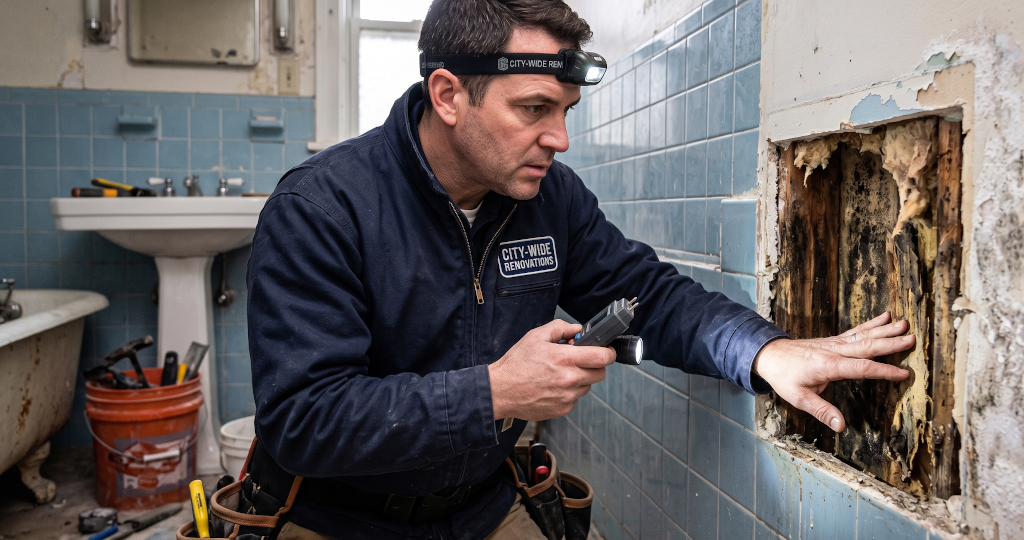
Hidden Water Damage and Mold
Bathrooms are inherently wet spaces. Even a tiny, microscopic leak in a shower valve over ten years will completely rot the wooden framing studs behind the wall. If a contractor opens a wall and finds widespread black mold or compromised load-bearing wood, the project immediately halts until the rot is cut out and safely replaced.
Outdated Galvanized Plumbing
If your home was built before 1980, you may have old galvanized steel water pipes. These pipes inevitably rust heavily from the inside out, restricting water pressure and leading to bursts. A reputable contractor will refuse to connect a brand new luxury shower valve to failing, 50-year-old pipes. You will have to pay to upgrade the immediate supply lines to modern PEX or copper.
Electrical Panel Capacity Limits
Adding a luxury steam shower, a heated floor system, and a high-powered jacuzzi tub requires significant electrical juice. Older homes often lack the available amperage on their main electrical breaker panel to support these heavy new loads. You may have to pay an electrician to upgrade a sub-panel before the bathroom tech can even be turned on.
5. Comprehensive Bathroom Remodel Cost Breakdown (2026 Data)
Budgeting is often the most confusing part of any major renovation. Costs vary wildly based on your specific zip code, the grade of luxury materials chosen, and whether you are altering the physical floor plan. Below is an updated national breakdown of what to expect in 2026 for different tiers of remodeling.
| Remodel Scale | Estimated Cost Range (2026) | Typical Scope of Work Included |
|---|---|---|
| Budget / Powder Room Update | $3,500 – $8,500 | Cosmetic updates only. Leaving the layout exactly as is. Painting, new hardware, stock vanity replacement, a basic toilet upgrade, and standard LVP flooring. No major tile or plumbing work. |
| Mid-Range Full Remodel | $12,000 – $28,000 | The standard modern update. Gutting the room to the bare studs. New mid-grade custom vanity, double sinks, modern tile flooring, replacing an old tub with a standard tile shower, and upgraded lighting. Same general plumbing footprint. |
| Luxury / Master En-Suite Build | $35,000 – $65,000+ | High-end custom finishes. Changing the floor plan entirely and heavily moving plumbing. Large curbless walk-in showers with multiple body jets, freestanding soaking tubs, radiant floor heating, custom cabinetry, and premium natural stone tile. |
Note: Roughly 40% to 50% of these total costs are heavily dedicated to professional labor, demolition, and specialized trades like tile setters and electricians. To ensure you are getting a fair market rate, it is imperative to source a minimum of three detailed bids from local pros.
6. Return on Investment (ROI): Which Upgrades Add the Most Value?
While a bathroom remodel drastically improves your daily quality of life, it is also a highly strategic financial move. According to national real estate data, a mid-range bathroom remodel generally recoups between 60% and 70% of its cost upon resale. However, not all design features yield the exact same return on investment.
High-ROI Features (What Buyers Actually Want)
- The Walk-In Shower: The vast majority of modern buyers prefer an expansive, beautifully tiled walk-in shower over a cramped, outdated shower and tub combo in the master suite.
- Double Vanities: If physical space permits, adding a second sink to a shared master bathroom is one of the most heavily requested features by prospective home buyers checking listings.
- Upgraded Ventilation: A high-quality, ultra-quiet exhaust fan rapidly prevents moisture buildup. This strictly protects the home from future mold and peeling paint, which is a massive selling point during strict home inspections.
Low-ROI Features (What Buyers Ignore)
- Highly Customized Luxury Tubs: While a massive, jetted jacuzzi tub may sound extremely appealing, many buyers simply view them as massive space-wasters that require extensive weekly cleaning and excess hot water to fill. Focus your budget on high-quality showers instead.
- Overly Specific Tile Patterns: Bold, highly personalized colors or incredibly intricate mosaic patterns that fit your unique taste might heavily alienate a conservative buyer looking for a clean, neutral, move-in-ready slate.

7. How to Prepare Your Home for a Major Renovation
A full bathroom tear-out is chaotic, noisy, and incredibly dusty. Proper household preparation is essential to maintaining your family's sanity while the construction crew is working inside your home for several weeks.
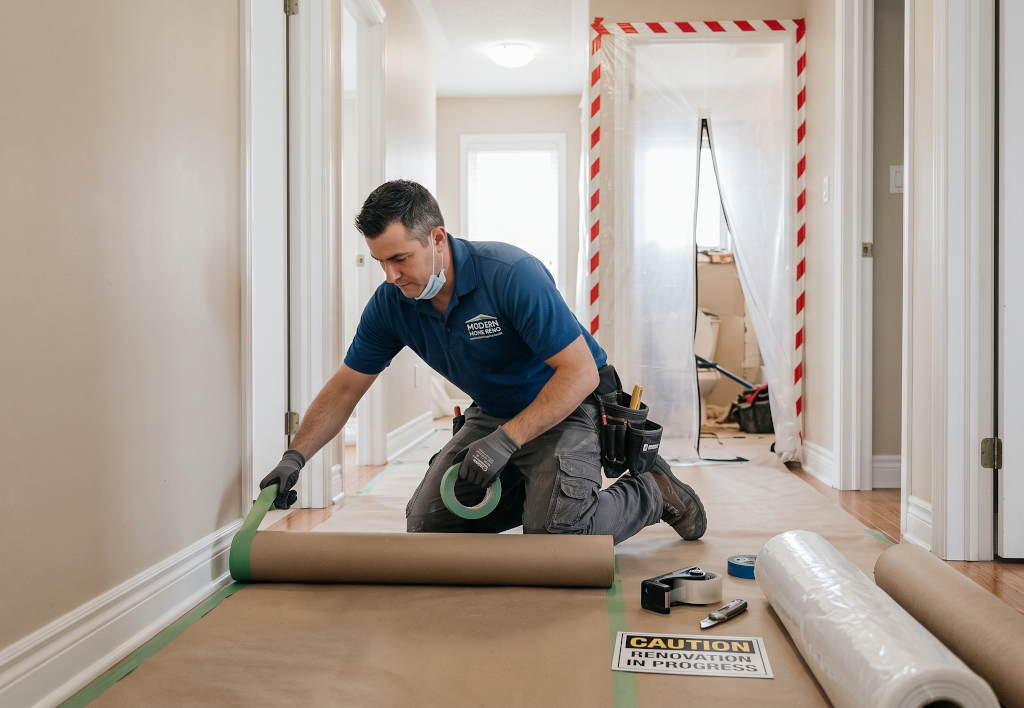
Set Up a Temporary Wash Station
If you only have one full bathroom in the house, a major remodel requires serious logistical planning. You may need to secure a temporary gym membership nearby for daily morning showers or make firm arrangements with a generous neighbor. Stock up heavily on hand sanitizer and create a dedicated washing station in the kitchen or basement utility sink.
Aggressive Dust Management Protocols
Demolishing old drywall and cutting thick ceramic floor tile generates an astonishing volume of fine, airborne silica dust. Before the first sledgehammer swings on demolition day, strictly require your contractor to seal off the work zone entirely using heavy-duty plastic zip-wall barriers.
Furthermore, ensure the crew completely covers all adjacent HVAC return air vents with filters. This actively prevents fine particulate matter from being forcefully circulated throughout the rest of the house via your air conditioning system.
8. How to Choose and Hire a Reliable Bathroom Contractor
The final success and safety of your bathroom remodel rests entirely on the shoulders of the contractor you choose to hire. Do not rush this vital process. A low-bid, unlicensed contractor who cuts corners will inevitably cost you thousands more in eventual emergency repairs.
When you connect with local remodelers, demand transparency and verify the following criteria rigorously before signing any contracts:
- Check State Licenses and Insurance: The contractor must hold an active general contractor's license in your specific state. Demand physical proof of active General Liability Insurance and Workers' Compensation coverage. Never take their word for it.
- Examine Their Specialized Portfolio: A contractor who builds great outdoor decks is not necessarily a master bathroom tile setter. Ask to see a physical portfolio specifically showcasing recent bathroom renovations that directly match the scale of your project.
- Understand the Bid Process: Never accept a vaguely worded estimate scrawled on a blank notepad. A professional, trustworthy bid should be highly detailed, breaking down the exact cost of demolition, plumbing, electrical, carpentry, tile, and finishes line by line.
- Watch for Major Red Flags: Be incredibly wary of contractors who demand more than 30% of the total project cost upfront. Also, avoid those who pressure you to pull the municipal building permits yourself under your own name, as this is a common tactic used by unlicensed operators to skirt legal liability.
9. Frequently Asked Questions (FAQ)
How long does a typical full bathroom remodel take?
A standard full bathroom remodel usually takes between 3 to 4 weeks under optimal conditions. However, custom luxury builds, extensive plumbing relocations, or unexpected issues like hidden water damage behind drywall can easily extend the timeline to 6 to 8 weeks.
Do I need a permit to remodel my bathroom?
Yes, permits are universally required if you are making structural changes, altering the plumbing footprint, or running new electrical lines. Simple cosmetic updates like painting or replacing a vanity usually do not require a permit. A licensed contractor handles the permitting process for you.
What is the most expensive part of a bathroom remodel?
Labor is typically the most expensive component, accounting for up to 40% to 50% of the total budget. As for materials, custom tiling and moving underlying plumbing are usually the most costly line items in a standard remodel.
Can I change my bathroom layout without moving the plumbing?
You can make significant visual layout changes without moving plumbing by utilizing the same footprint. Moving the physical location of the toilet or shower drain requires breaking into the floor slab or joists, which dramatically increases costs.