
Your floors endure more daily abuse than any other surface in your house. They face constant foot traffic, heavy furniture, spilled liquids, and scratching pet claws. Over time, even the highest quality materials eventually break down, warp, or crack under the pressure.
Ignoring damaged floors is not just a cosmetic mistake; it is a severe structural hazard. Peeling laminate or cracked tiles allow water to seep directly into the wooden subfloor. Once moisture is trapped beneath your floors, black mold spreads rapidly and joists begin to rot. Soft, spongy spots in your hallway indicate severe structural decay that will cost thousands of dollars to fix if left untreated.
In 2026, flooring technology has completely revolutionized the home improvement market. Outdated sheet vinyl and high-maintenance carpets have been replaced by ultra-durable, waterproof engineering. Upgrading your floors instantly revitalizes your home’s aesthetic and drastically increases your property value before a sale.
If your current floors are stained, buckling, or causing a tripping hazard, you need to act fast. You can get matched with vetted, local flooring experts right now to secure competitive installation bids and fix underlying structural issues before they worsen.
This comprehensive guide breaks down the most popular materials in 2026, compares realistic installation costs per square foot, and reveals the strict criteria you must use to hire a reliable local contractor without getting ripped off.

1. Hardwood Flooring: Timeless Elegance and High ROI
Hardwood remains the absolute gold standard for luxury residential flooring. It offers a massive return on investment (ROI) because homebuyers specifically look for hardwood when touring properties. However, modern homeowners must choose between solid and engineered wood.
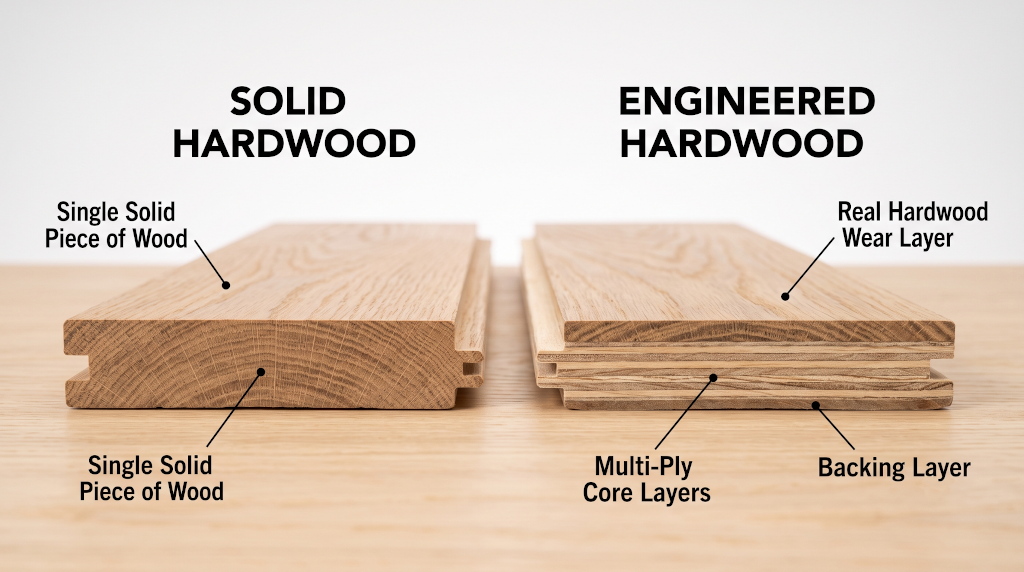
Solid Hardwood
Solid hardwood is milled from a single piece of timber, typically oak, maple, or hickory. The primary advantage of solid wood is longevity. A standard 3/4-inch thick plank can be sanded down and completely refinished five to six times over its lifespan. A well-maintained solid hardwood floor easily lasts over a century.
However, solid wood reacts violently to humidity. It expands in the summer and shrinks in the winter, causing gaps. You cannot install solid hardwood in a basement or directly over a concrete slab because ground moisture will instantly warp the boards.
Engineered Hardwood
Engineered hardwood solves the humidity problem. It features a genuine hardwood veneer glued over multiple layers of high-quality plywood. The cross-grain construction makes the plank extremely stable and resistant to warping.
Engineered wood looks identical to solid wood from the surface and can be safely installed in basements or over concrete. The only drawback is that the top veneer is thin, meaning you can typically only sand and refinish an engineered floor one time.
2. Luxury Vinyl Plank (LVP): The 2026 Industry Standard
Luxury Vinyl Plank (LVP) is actively dominating the 2026 flooring market for one specific reason: it is virtually indestructible. Modern LVP utilizes high-definition 3D printing to perfectly mimic the texture, color, and grain pattern of real hardwood or natural stone.
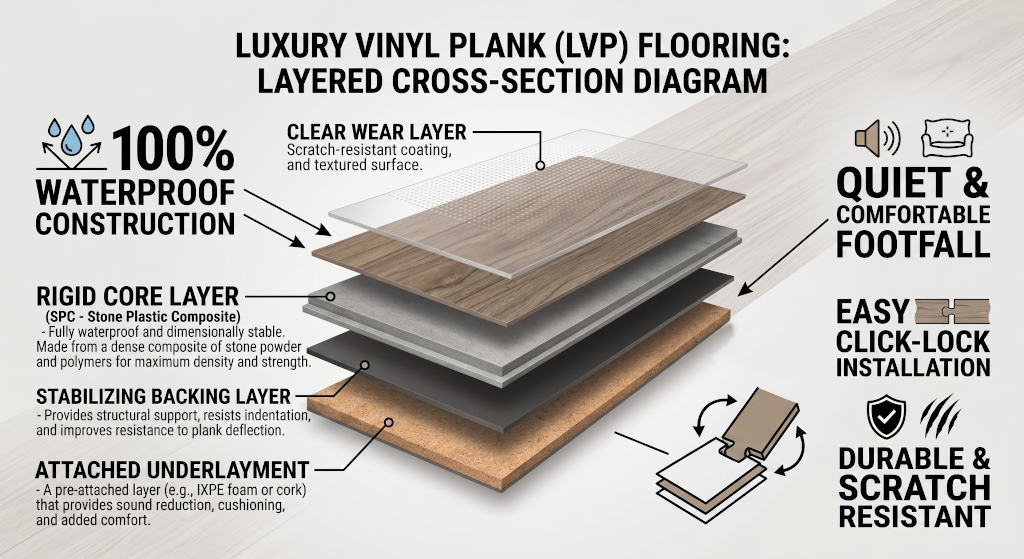
Why LVP is Taking Over
Unlike real wood, LVP is 100% waterproof. You can install it in kitchens, full bathrooms, and laundry rooms without fear of water damage. If a pipe bursts or a dog has an accident, the planks will not swell, warp, or peel.
Furthermore, premium rigid-core LVP (like SPC or WPC) includes a thick, transparent wear layer on top. This wear layer makes the floor incredibly resistant to scratches, dents, and high heel marks. For active families with large dogs and young children, LVP is the smartest financial investment.
3. Tile and Laminate: Specialty and Budget Options
While LVP and hardwood control the majority of the market, porcelain tile and modern laminate still serve critical roles in specific rooms of the house.
Porcelain and Ceramic Tile
For custom showers, wet rooms, and high-end entryways, tile is unmatched. Porcelain is fired at extremely high temperatures, making it completely impervious to water and highly resistant to cracking. Tile installation is highly labor-intensive, requiring specialized wet saws, perfectly mixed thin-set mortar, and meticulous grouting. A bad tile job will crack within months as the house naturally settles.
The Return of High-End Laminate
Ten years ago, laminate flooring had a terrible reputation for peeling apart the moment it got wet. In 2026, manufacturers have engineered water-resistant laminate that rivals the durability of LVP. Laminate actually provides better scratch resistance than LVP and feels slightly closer to real wood underfoot. However, it still cannot withstand standing water for long periods, making it risky for full bathrooms.

4. The 2026 Flooring Replacement Cost Breakdown
Flooring costs are calculated by the square foot. When reviewing estimates, you must confirm whether the price includes professional installation, underlayment materials, and the heavy labor required to tear out your old floors.
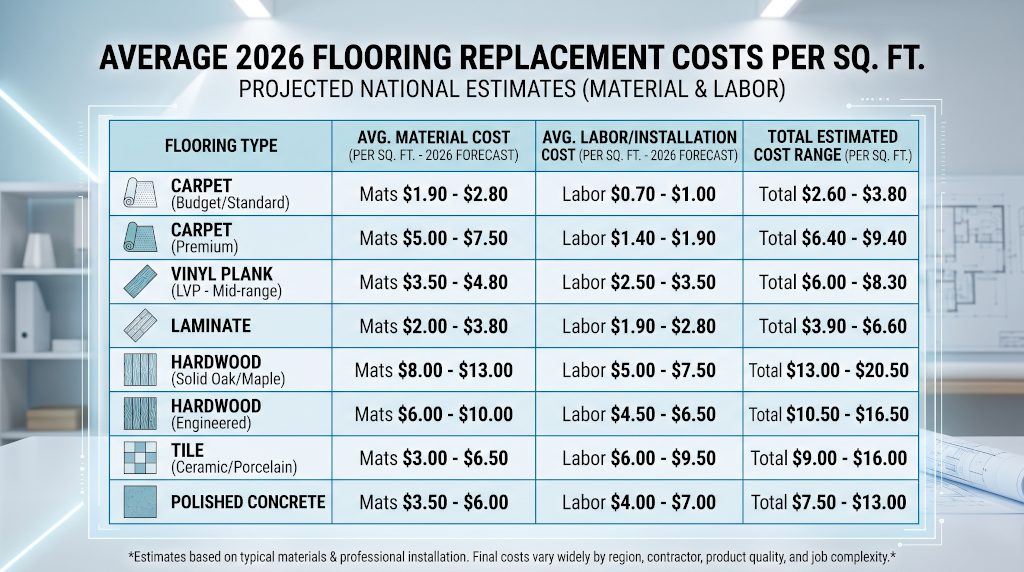
Below is a realistic national average cost breakdown for 2026 flooring replacements. Prices will fluctuate based on the specific brand tier you choose and local labor rates.
| Flooring Material | Material Cost (Per Sq. Ft.) | Total Installed Cost (Per Sq. Ft.) | Best Use Case |
|---|---|---|---|
| Luxury Vinyl Plank (LVP) | $3.00 – $6.00 | $5.00 – $9.00 | Active homes, pets, kitchens |
| Engineered Hardwood | $4.50 – $9.00 | $8.00 – $14.00 | Living rooms, basements |
| Solid Hardwood | $5.00 – $12.00 | $9.00 – $18.00+ | High ROI living spaces |
| Porcelain Tile | $3.00 – $10.00 | $10.00 – $20.00+ | Bathrooms, wet rooms |
| Modern Laminate | $2.00 – $5.00 | $4.00 – $8.00 | Bedrooms, budget remodels |
*Note: Costs strictly include basic underlayment and standard installation. Fixing structural subfloor damage, removing glued-down tile, or installing new baseboards will add significant costs to the final bill.
5. Subfloor Repair: The Hidden Renovation Threat
A new floor is only as strong as the subfloor resting directly beneath it. The biggest mistake homeowners make is forcing a contractor to install expensive hardwood directly over a rotting, uneven subfloor to save money.
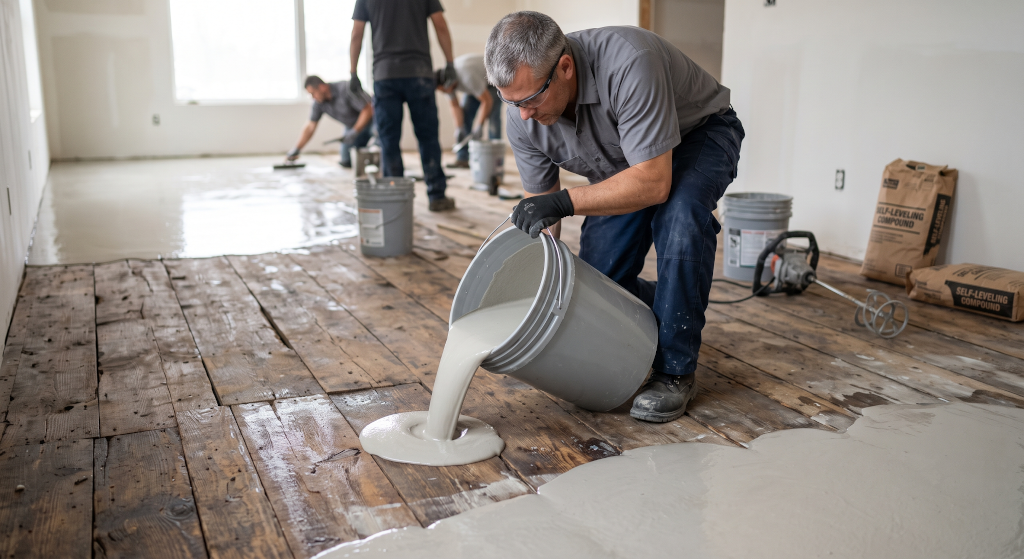
Leveling and Moisture Barriers
Floating floors (like LVP and laminate) utilize a mechanical locking system to click the planks together. If the subfloor has humps or dips exceeding 3/16 of an inch, the rigid planks will bounce when you walk on them. Within months, the constant flexing will snap the locking mechanisms, completely ruining the floor.
A professional contractor will aggressively inspect your subfloor after demolition. They will replace any plywood damaged by water or termites. They will then grind down high spots and pour self-leveling compound into low spots to create a perfectly flat canvas. Finally, they will lay down a specialized moisture barrier to prevent ground vapor from attacking the new planks.
6. The Professional Installation Process: What to Expect
Hiring an expert ensures the job is completed rapidly and accurately. When you hire a licensed flooring contractor, they follow strict manufacturer protocols to protect your warranty.
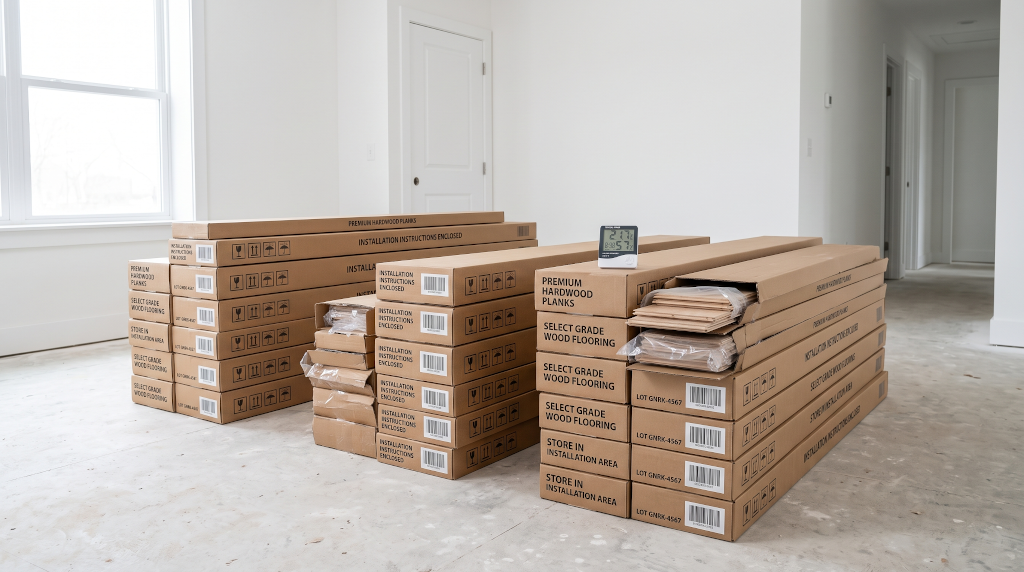
- Acclimation: If you purchase real hardwood or laminate, the contractor must deliver the boxes to your home at least 48 to 72 hours before installation. The wood must physically acclimate to your home’s exact temperature and humidity to prevent massive expansion after it is nailed down.
- Demolition and Disposal: The crew will carefully rip out old carpets, pry up glued linoleum, or smash out old tile. A reputable company includes the cost of a dumpster and hauls all toxic debris away from your property.
- Subfloor Preparation: The crew sands, levels, and repairs the plywood or concrete base. They then sweep and vacuum the area multiple times. A single pebble left under LVP will eventually punch a hole straight through the plank.
- Installation and Staggering: The actual installation begins. True professionals calculate the precise layout to avoid tiny slivers of wood at the edges of the room. They meticulously stagger the seams between boards to ensure maximum structural strength and a natural visual flow.
- Trim and Transitions: Finally, they install quarter-round molding to cover the required expansion gaps near the walls. They also install transition strips (T-moldings or reducers) where the new flooring meets carpet or doorways.
7. How to Hire a Reliable Local Flooring Contractor
The home improvement industry is heavily populated with amateur handymen who claim they can install flooring. Installing floors poorly is incredibly easy; installing them perfectly requires deep technical knowledge and specialized tools.
To protect your home and avoid expensive rework, enforce these strict rules when hiring a contractor:
- Verify Liability Insurance: Demand a physical copy of their commercial liability insurance. If an installer accidentally drives a nail straight through a hidden water pipe and floods your house, their insurance must cover the catastrophic damage.
- Demand a Written Contract: Never rely on a verbal promise. The contract must explicitly state the total square footage, the exact brand and color of the material, the type of underlayment, and a firm timeline for completion.
- No Massive Upfront Labor Deposits: It is normal to pay upfront for the physical materials so the contractor can order them. However, you should never pay more than 10% to 20% of the labor costs before the work actually begins. Hold the final payment until you have walked on the floor and verified the quality.
- Check Warranty Terms: Distinguish between the manufacturer’s warranty on the material and the contractor’s warranty on the labor. A high-quality local contractor will provide a written guarantee covering their installation work for at least one to two years.
8. Frequently Asked Questions (FAQ)
How much does it cost to replace 1,000 square feet of flooring in 2026?
In 2026, replacing 1,000 square feet of flooring typically costs between $4,500 and $12,000 depending entirely on the material. Luxury Vinyl Plank (LVP) averages $4,500 to $7,000 fully installed. High-end solid hardwood can cost between $8,000 and $15,000 for the same space.
Is Luxury Vinyl Plank (LVP) better than engineered hardwood?
LVP is significantly better for high-traffic areas, pet owners, and wet rooms like kitchens and bathrooms because it is 100% waterproof and highly scratch-resistant. Engineered hardwood provides a better return on investment and a more authentic feel, but it can be damaged by standing water and heavy impacts.
Can new flooring be installed directly over old flooring?
Sometimes. You can often install floating floors like LVP or laminate directly over old vinyl, low-pile carpet, or tight ceramic tile if the surface is completely flat. However, you should never install new flooring over rotting wood, warped planks, or heavily damaged subfloors.
How long does a professional flooring installation take?
A professional crew can typically tear out old flooring and install new LVP or laminate in a standard 1,500-square-foot home in two to three days. Solid hardwood installation takes significantly longer (five to seven days) because the wood must acclimate to the home's humidity before being nailed down.