
Your gutters are the unsung heroes of your home’s structural integrity. Most homeowners never look up at their roofline until a severe storm hits. By the time you notice a problem, the damage is often already done.
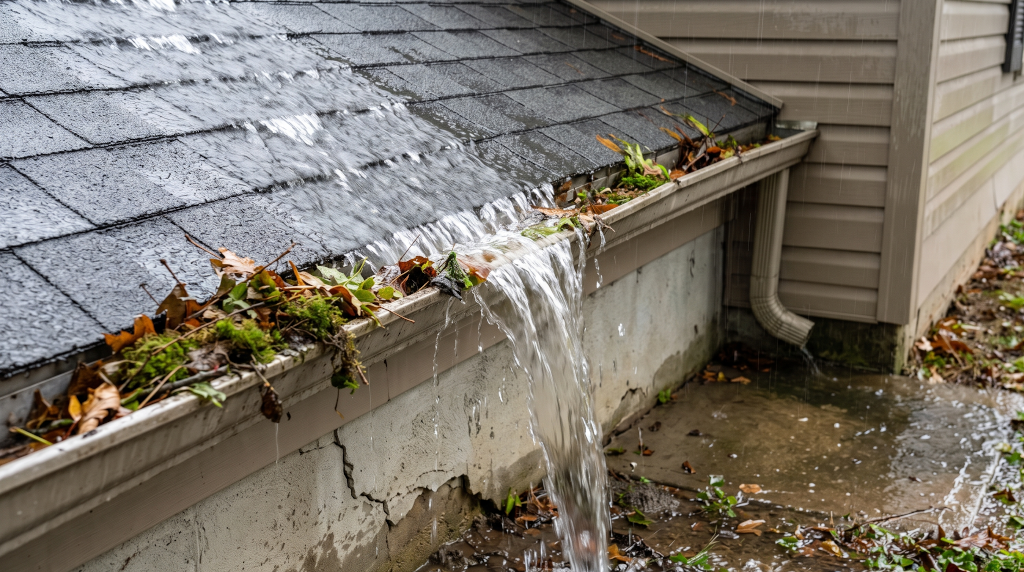
Gutters have one crucial job: to capture thousands of gallons of rainwater and route it safely away from your home. When they fail, water spills directly down your exterior walls. This leads to rotted siding, destroyed landscaping, and flooded basements. Worst of all, pooling water creates immense hydrostatic pressure that can crack your concrete foundation.
Repairing a cracked foundation easily costs upwards of $15,000. Replacing a failing gutter system is a fraction of that cost. It is an immediate, mandatory investment in the safety of your property. Ignoring sagging or leaking gutters will guarantee catastrophic financial consequences.
If you see water pouring over the edges of your gutters right now, you must act quickly. You can get matched with vetted, local gutter experts immediately to inspect your roofline and provide emergency replacement quotes.
For homeowners ready to upgrade their exterior protection, this comprehensive guide explains exactly what you need to know in 2026. We will break down real material costs, expose the truth about gutter guards, and show you exactly how to hire a contractor you can trust.

1. Repair vs. Replace: When Can You Save Your Gutters?
Not every drip requires a total system replacement. Many homeowners panic when they see water leaking from a seam. Knowing the difference between minor maintenance and structural failure can save you thousands of dollars.
When a Simple Repair is Enough
If your gutters are relatively new (under ten years old) and made of seamless aluminum, most issues are easily fixable. The most common problem is a leaking corner joint. Contractors can clean the old sealant out, dry the metal, and apply a fresh bead of industrial-grade silicone. This takes minutes and costs very little.
Another common issue is a single loose bracket or spike. If one section of the gutter is pulling slightly away from the fascia board, a contractor can install new hidden hangers. These brackets screw directly into the roof rafters, pulling the gutter tight against the house once again.
Signs You Need Immediate Replacement
Certain symptoms indicate that your system is completely compromised. If you see any of these signs, repairs are a waste of money:
- Severe Sagging or Bowing: Gutters must be perfectly pitched to drain water. If entire sections are sagging in the middle, the metal is permanently warped. Water will pool in the belly, adding weight until the entire run collapses.
- Widespread Rust and Corrosion: Aluminum does not rust, but older steel gutters do. If you see orange rust spots or holes forming in the bottom of the trough, the metal is deteriorating rapidly. You cannot patch widespread rust.
- Rotted Fascia Boards: If the wooden board holding the gutters (the fascia) is soft, spongy, or rotting, the gutters will eventually fall off. The contractor must tear down the gutters, replace the rotted wood, and install a brand new gutter system.
- Tiger Striping on Siding: Vertical dirt stains running down the outside of your gutters and siding mean dirty water is constantly overflowing. This indicates the system is undersized for your roof and requires a larger replacement.
2. The Real Cost of Gutter Replacement in 2026
Gutter pricing is calculated by the linear foot. The larger your home, the more material is required. In 2026, material costs have stabilized, but professional labor rates remain high due to insurance requirements for ladder work.
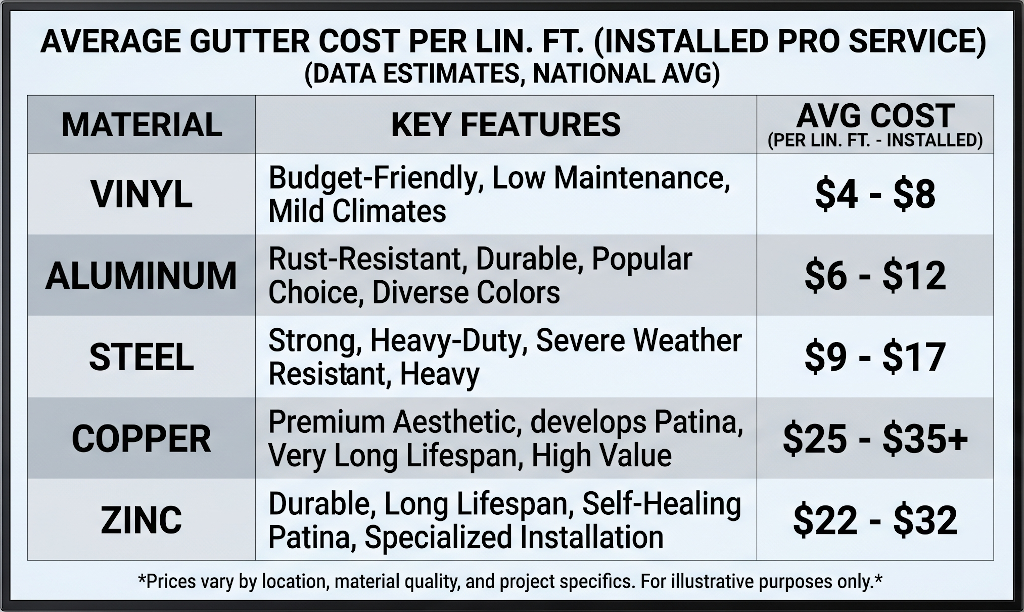
The total price of your project will depend heavily on the material you select. Here is the national average cost breakdown for professional installation.
| Gutter Material | Average Cost (Per Linear Foot) | Estimated Lifespan | Best Use Case |
|---|---|---|---|
| Vinyl (Sectional) | $4.00 – $7.00 | 10 - 15 Years | Sheds, detached garages, warm climates. |
| Seamless Aluminum | $9.00 – $14.00 | 20 - 30 Years | The standard for 90% of residential homes. |
| Galvanized Steel | $11.00 – $18.00 | 20 - 25 Years | Heavy snow regions and extreme weather. |
| Genuine Copper | $25.00 – $40.00+ | 50 - 100 Years | Historic homes and luxury properties. |
*Note: A standard single-story home requires roughly 150 to 200 linear feet of gutters. Two-story homes will incur additional labor fees due to the difficulty and risk of working at higher elevations.
Hidden Costs to Watch For
When reviewing a quote, check if downspouts are included in the linear foot pricing. Most reputable companies include them. Additionally, factor in disposal fees for your old gutters. If your fascia boards require replacement before the new gutters can be mounted, expect to pay an extra $10 to $20 per foot of wood replaced.
3. Sectional vs. Seamless Gutters: Which is the Smart Investment?
If you walk into a big-box hardware store, you will find 10-foot sections of vinyl or aluminum gutters. These are sectional gutters. They are designed for DIYers to snap together and seal with caulking.
The Problem with Sectional Gutters
Sectional gutters are fundamentally flawed. Every 10 feet, there is a seam. That seam is held together by silicone sealant. Over a few years of expanding in summer heat and contracting in winter cold, that sealant cracks and fails. A home with sectional gutters will inevitably develop dozens of tiny leaks.
Why Seamless Aluminum is the Modern Standard
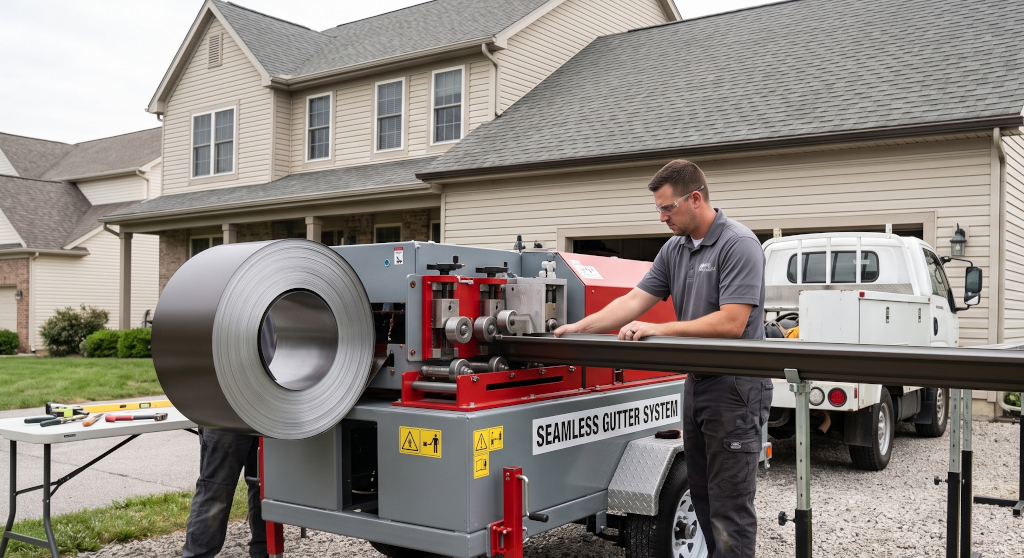
Professional contractors exclusively install seamless gutters. When a crew arrives at your home, they bring a massive roll of flat aluminum and a specialized extrusion machine. They measure the exact length of your roofline, feed the metal into the machine, and punch out a single, perfectly formed gutter that is custom cut to size.
A 50-foot run of roof gets one solid 50-foot gutter. The only seams exist at the very corners of the house and where the downspouts connect. By eliminating 95% of the seams, you eliminate 95% of the potential failure points. This is why seamless aluminum is the smartest investment for long-term home protection.

4. Gutter Guards and Leaf Protection: Are They Worth the Money?
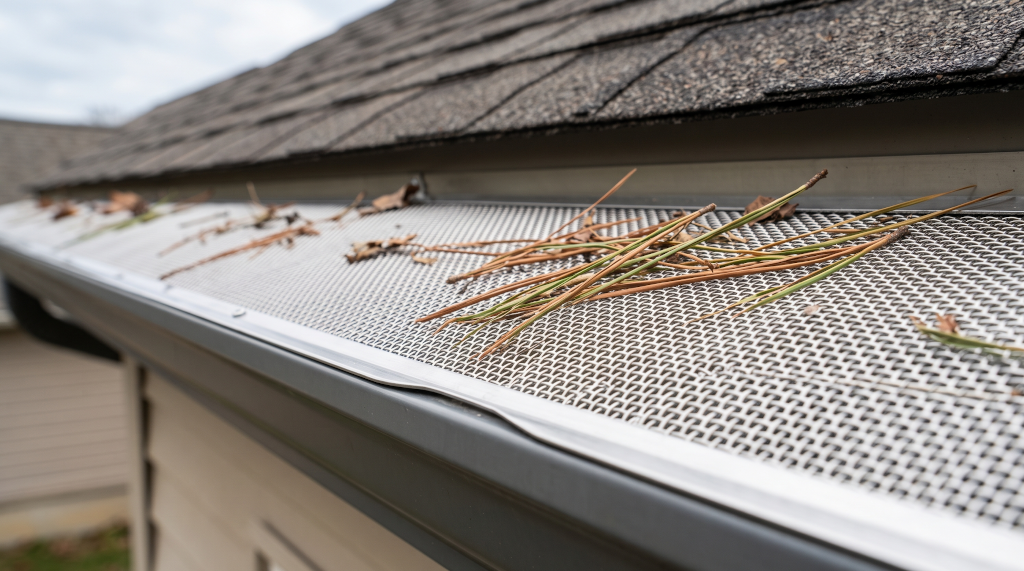
Cleaning gutters is a dangerous, filthy chore. Over 160,000 ladder-related injuries occur annually in the United States. Gutter guards are designed to keep leaves, twigs, and pine needles out of the trough, allowing only water to flow through.
Types of Gutter Protection
- Plastic DIY Screens: These are cheap plastic grids you snap into the gutter. They are effectively useless. They warp in the sun, blow away in high winds, and trap small debris directly in the grid, blocking water flow entirely.
- Brush and Foam Inserts: These look like giant pipe cleaners stuffed into your gutters. While they stop large leaves, they act like a sponge for mud, pollen, and roof grit. Over time, they become incredibly heavy, clogged blocks of dirt that sprout weeds.
- Reverse Curve (Helmets): These feature a solid metal top with a curved lip. Water adheres to the curve via surface tension and rolls into the gutter, while leaves shoot off the edge. They work well for large leaves but can struggle during absolute torrential downpours, where water simply overshoots the gutter entirely.
- Micro-Mesh Guards: This is the 2026 industry standard. These guards use a surgical-grade stainless steel mesh stretched over an aluminum frame. The holes are so small that not even sand or roofing shingle granules can get inside. They accept massive volumes of water while perfectly repelling debris.
If your property is surrounded by mature trees, investing in professional micro-mesh guards is highly recommended. It protects the structural integrity of the gutter system by preventing heavy clogs and keeps you off a dangerous ladder.
5. The Professional Installation Process: What to Expect
A premium seamless aluminum gutter will fail instantly if installed improperly. Proper installation is a strict science based on gravity, volume, and correct fastener placement. When you hire an expert local installer, they follow specific engineering protocols.
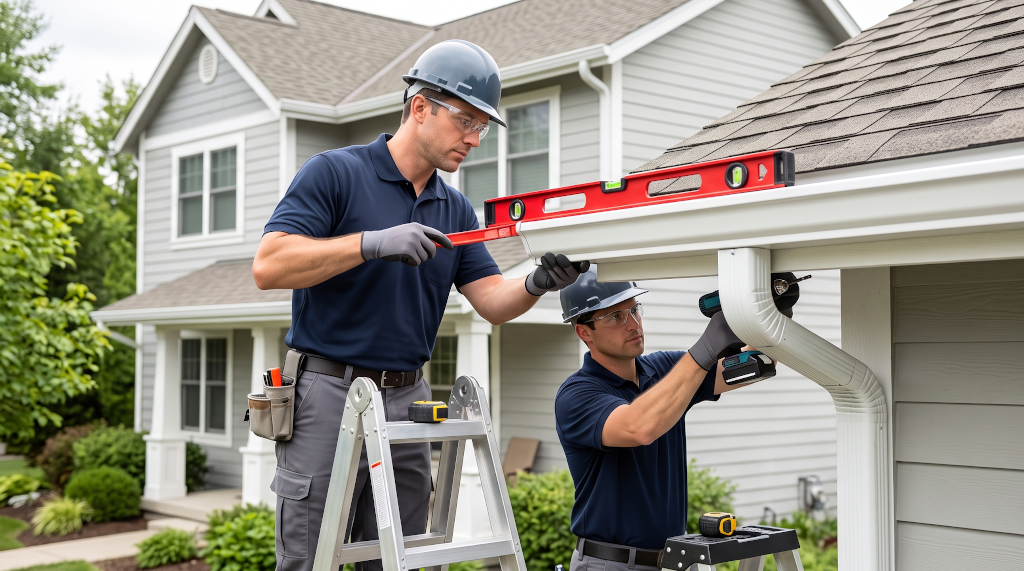
- Fascia Inspection and Repair: The crew will remove the old gutters and deeply inspect the exposed wood. Any rotted sections are cut out and replaced. Gutters mounted to soft wood will tear down during the first heavy snowstorm.
- Custom Extrusion: The technicians measure the roofline precisely and run the aluminum coil through the machine, creating continuous lengths of gutter.
- Establishing the Pitch: This is the most critical step. Gutters must slope slightly toward the downspouts to ensure water drains completely. The standard pitch is 1/4 inch of drop for every 10 feet of gutter run. If the pitch is wrong, standing water will breed mosquitoes.
- Bracket Spacing: Heavy-duty hidden hangers are installed inside the gutter trough. These brackets are screwed directly through the fascia and into the structural roof rafters. They must be placed every 24 inches (or every 16 inches in heavy snow climates).
- Downspout Assembly and Routing: The final step is connecting the vertical downspouts. A professional crew will ensure the downspouts route the water at least three to four feet away from the foundation wall using splash blocks or underground extensions.

6. How to Hire a Reliable Local Gutter Contractor
The home improvement industry has its share of storm chasers and underqualified handymen. Hiring a specialized gutter contractor requires vetting. You cannot simply choose the lowest bid, as cheap labor usually means cheap materials and terrible bracket spacing.
Demand these qualifications before you sign any contract:
- Workers' Compensation Insurance: This is absolutely non-negotiable. Gutter installation involves working on high ladders. If an uninsured worker falls on your property, you can be sued for their medical bills. Demand a certificate of insurance.
- Specialized Equipment: A legitimate gutter company owns their own extrusion machines. If a contractor says they are going to buy materials from a home center, they are not a professional gutter company.
- Workmanship Warranties: A high-quality contractor will guarantee their installation work for a minimum of five years. They should promise to return and adjust the pitch for free if the gutters hold standing water.
- Clear Written Estimates: The quote must specify the exact gauge (thickness) of the aluminum. The industry standard is .027 gauge, but .032 gauge is preferred for longevity. The contract must also specify the size of the downspouts (3x4 inch oversized downspouts are best).
7. Frequently Asked Questions (FAQ)
How much does it cost to replace gutters on an average home in 2026?
In 2026, replacing gutters on a standard single-story home costs between $1,200 and $2,500. This depends largely on the material. Seamless aluminum averages $9 to $14 per linear foot installed. High-end materials like copper can exceed $30 per linear foot. Two-story homes incur higher labor costs due to ladder work and safety requirements.
How long do seamless aluminum gutters actually last?
Properly installed seamless aluminum gutters can last 20 to 30 years. Aluminum does not rust like steel, making it highly durable against the elements. However, their lifespan drops significantly if they are not cleaned regularly, as trapped wet debris adds immense weight that can pull the system away from the roofline.
Do gutter guards completely eliminate the need for cleaning?
No gutter guard completely eliminates the need for maintenance. High-quality micro-mesh guards keep out 99% of debris, including pine needles and shingle grit. However, you still need to visually inspect them once a year and brush off any organic matter that settles on top of the screens to ensure proper water flow.
What are the most obvious signs my gutters are failing?
The most critical signs of gutter failure include visible sagging, water spilling over the edges during light rain, and separation from the roof fascia board. You may also notice peeling paint on your siding or washed-out trenches in your landscaping directly below the roofline, which indicates water is not being routed to the downspouts.