
Your heating, ventilation, and air conditioning (HVAC) system is the mechanical heart of your home. It works tirelessly behind the scenes to keep your family comfortable. Most homeowners completely ignore this complex machinery until the exact moment it fails.
A sudden HVAC breakdown during extreme summer heat or freezing winter temperatures is a serious crisis. A dead air conditioner allows indoor humidity to spike instantly, promoting rapid black mold growth. A failed furnace in January can lead directly to frozen, bursting pipes that cause tens of thousands of dollars in catastrophic water damage.
In 2026, the HVAC industry is undergoing massive regulatory changes. The shift toward new, environmentally friendly refrigerants and strict SEER2 efficiency standards means replacing or repairing your system requires current knowledge. You cannot rely on outdated advice from five years ago.
If your system is blowing warm air right now, making loud grinding noises, or simply will not turn on, you do not have time to wait. You must act quickly to protect your home. You can get matched with vetted, local HVAC experts right now to schedule immediate emergency repairs or secure competitive replacement bids.
For homeowners planning a proactive upgrade, this highly detailed guide breaks down everything you need to know today. We cover the real costs of 2026 replacements, explain complex efficiency ratings, and teach you how to hire a reliable contractor without getting ripped off.
1. Air Conditioning: The Repair vs. Replace Dilemma
When an air conditioner breaks down on a 95-degree day, panic often leads to bad financial decisions. Knowing the difference between a simple $200 repair and a total compressor failure is critical. You must understand the specific symptoms to avoid being oversold by a predatory technician.
When to Choose a Simple Repair
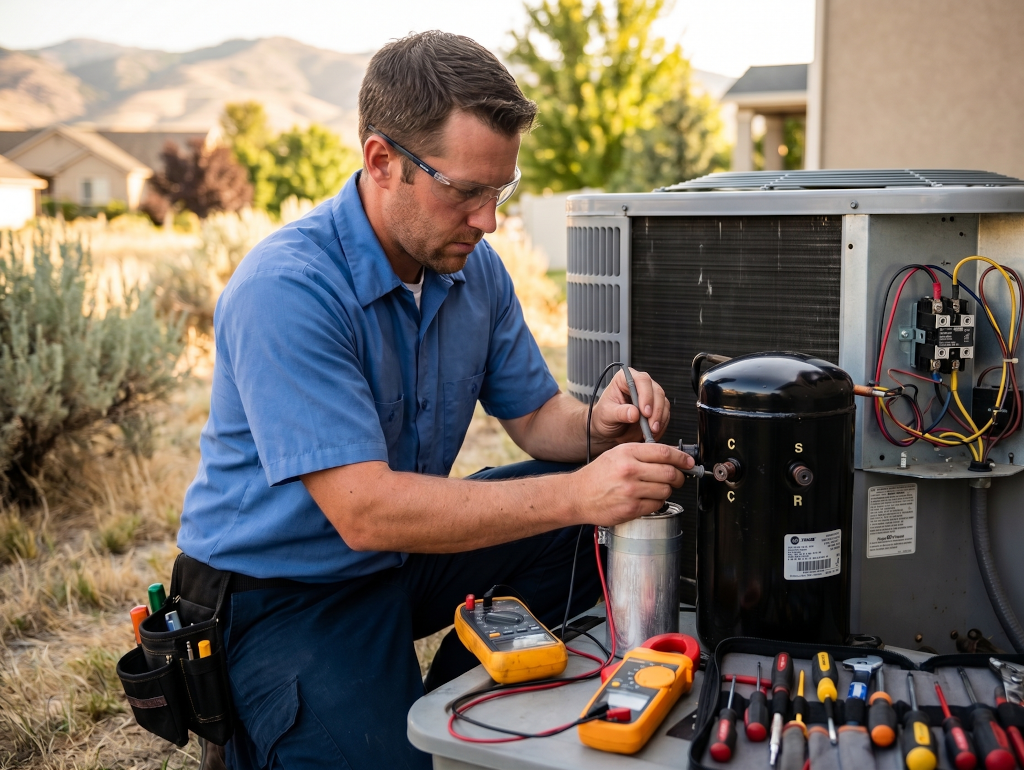
Many frightening symptoms are actually caused by inexpensive electrical components failing. If your outside fan is not spinning but you hear a humming noise, you likely have a dead run capacitor. A capacitor is a small battery-like device that stores electricity to jump-start the motor. Replacing it is a fast, cheap repair.
Similarly, if your system turns on and off every two minutes (short cycling), you might just have a clogged air filter or a dirty flame sensor. If your unit is less than ten years old and the repair cost is under $500, fixing the unit is almost always the smart choice.
When Replacement is the Only Option
You should immediately consider a full replacement if you face any of the following scenarios:
- Compressor Failure: The compressor is the heavy mechanical engine inside the outdoor unit. If it dies, the replacement part and intensive labor easily exceed $2,000. It is rarely worth putting a new compressor into an old system.
- The 5000 Rule: Multiply the age of your equipment by the estimated cost of the repair. If the total exceeds $5,000, replace the unit. For example, a 12-year-old unit facing a $500 repair ($500 x 12 = 6,000) should be completely replaced.
- Refrigerant Leaks on Old Units: Older systems use R-22 (Freon) or older generation R-410A refrigerants. R-22 is legally phased out and incredibly expensive to source. If a 15-year-old system develops a leak in the evaporator coil, refilling the lost chemicals will cost a small fortune.
- Severe Rust and Corrosion: If the physical metal casing, fins, and internal copper lines are heavily corroded, the system is fundamentally compromised and near the absolute end of its lifespan.
2. Heating Systems: Furnaces, Heat Pumps, and Winter Safety
Heating your home is not just about comfort; it is a matter of absolute life safety. When temperatures drop below freezing, a reliable heating system prevents hypothermia and stops your domestic water pipes from freezing solid and bursting behind your drywall.
Gas Furnaces and the Carbon Monoxide Danger
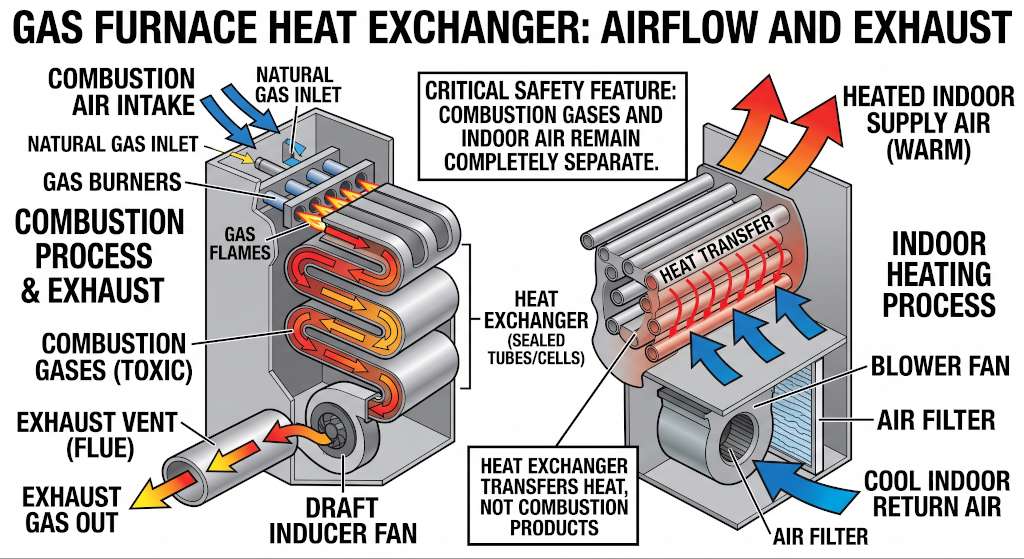
Natural gas furnaces are incredibly powerful and fast-acting. However, they burn combustible fuel inside your home. The heart of a gas furnace is the heat exchanger. This metal chamber contains the toxic exhaust gases (including carbon monoxide) while allowing clean indoor air to blow safely across the hot exterior metal.
Over years of constant expansion and contraction, the heat exchanger metal can crack. A cracked heat exchanger allows deadly, odorless carbon monoxide to mix directly into the warm air blowing out of your vents. If a technician physically shows you a cracked heat exchanger via a digital inspection camera, the furnace must be instantly shut down and completely replaced. There is no safe way to patch it.
The Heat Pump Revolution
Electric heat pumps are rapidly dominating the 2026 HVAC market. Unlike a furnace that burns fuel to create heat, a heat pump uses electricity to physically move existing heat. In the summer, it pulls heat out of your house (acting exactly like an AC). In the winter, it reverses the flow, extracting ambient heat from the outside air and pumping it indoors.
Modern cold-climate heat pumps are engineering marvels. They can efficiently heat a home even when outside temperatures plunge to negative 15 degrees Fahrenheit. Because they do not burn fossil fuels, they completely eliminate the risk of carbon monoxide poisoning. They also qualify for massive federal tax credits under current energy transition laws.
Dual Fuel (Hybrid) Systems
For homeowners in extreme northern climates, a dual fuel system is often the ultimate solution. This pairs an electric heat pump with a backup gas furnace. The heat pump handles the heating efficiently for 90% of the winter. When a severe blizzard hits and temperatures drop to negative 20, the system automatically switches to the raw power of the gas furnace.
3. The 2026 HVAC Replacement Cost Breakdown
HVAC pricing has shifted rapidly over the last few years. The introduction of strict 2026 efficiency mandates and new low-GWP (Global Warming Potential) refrigerants has increased equipment manufacturing costs. Additionally, the ongoing shortage of licensed technicians keeps labor rates high.
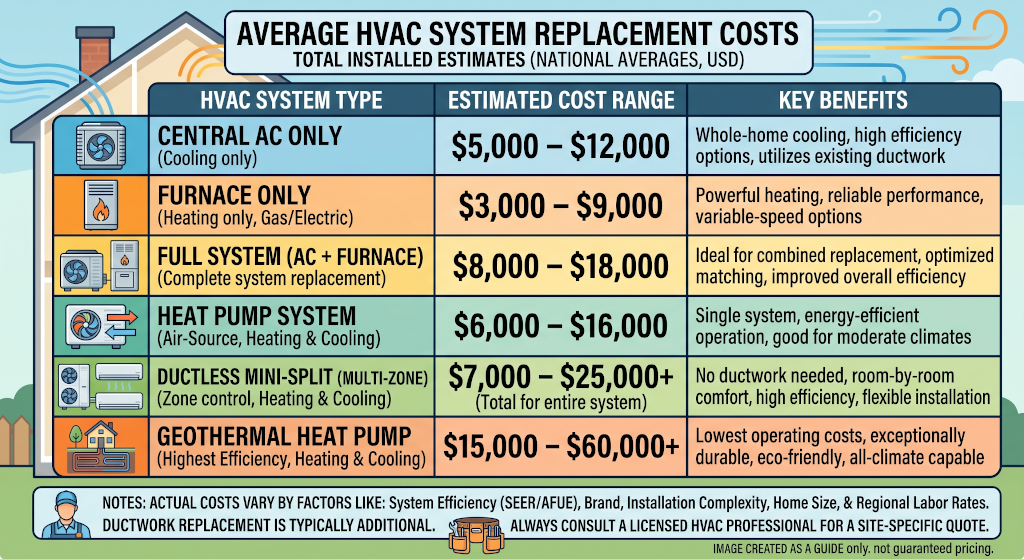
The total cost you pay depends heavily on the size (tonnage) of the equipment, the complexity of the installation, and the efficiency tier you choose. Below is a realistic national average cost breakdown for a standard 2,000-square-foot home requiring a 3-ton system.
| System Type | Basic Efficiency (Single-Stage) | High Efficiency (Two-Stage/Variable) | Estimated Total Lifespan |
|---|---|---|---|
| Central Air Conditioner Only | $4,500 – $6,500 | $6,500 – $10,000+ | 12 - 15 Years |
| Gas Furnace Only | $3,500 – $5,000 | $5,000 – $8,000+ | 15 - 20 Years |
| Complete Split System (AC + Furnace) | $7,000 – $10,500 | $11,000 – $16,000+ | Varies by component |
| Electric Heat Pump System | $6,500 – $9,000 | $9,500 – $15,000+ | 10 - 15 Years |
| Ductless Mini-Split (Per Zone) | $3,000 – $4,500 | $4,500 – $6,500 | 15 - 20 Years |
*Note: Costs strictly include standard labor and hauling away old equipment. Extensive ductwork modifications, asbestos removal, or upgrading your electrical panel to handle a new heat pump will add thousands to the final bill.
Understanding Staging Technology
A basic single-stage system only has one speed: 100% blast. It turns on at maximum power, cools the house rapidly, and shuts off. This creates hot and cold spots. A two-stage system operates at a lower, quieter capacity most of the time (around 65%), only kicking into high gear during extreme weather. Variable-speed systems operate like a car accelerator, constantly adjusting output by 1% increments to maintain perfect temperature and humidity control.
4. Demystifying Energy Efficiency: SEER2 and AFUE
When reviewing contractor quotes, you will see heavily emphasized acronyms next to price tags. Understanding these numbers is critical to projecting your future monthly utility bills.
SEER2 (Cooling Efficiency)
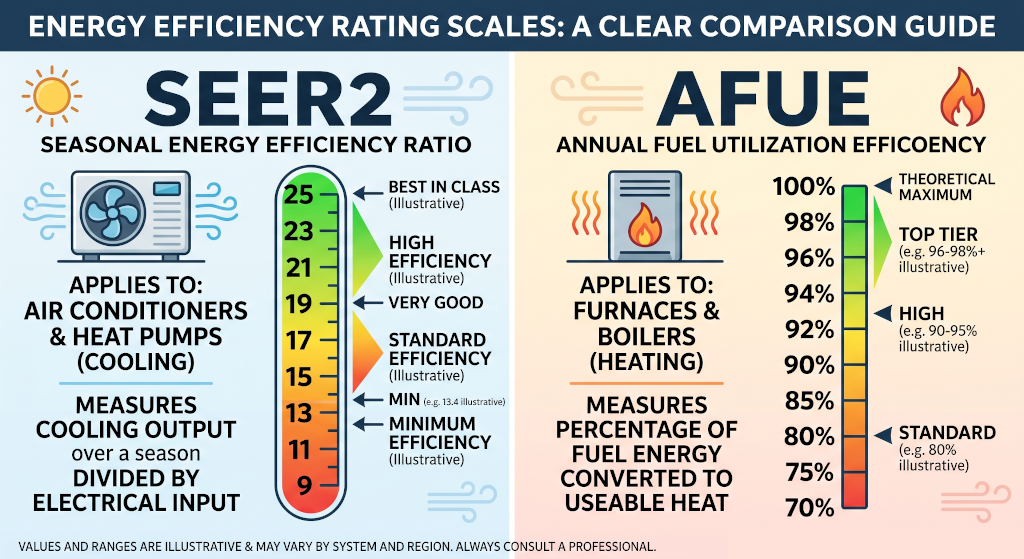
SEER2 stands for Seasonal Energy Efficiency Ratio 2. It measures how much cooling an air conditioner provides for every watt of electricity it consumes over a typical summer. As of recent federal mandates, the minimum legal SEER2 rating in northern states is 13.4, while southern states require a minimum of 14.3 SEER2.
Upgrading from an old 10 SEER unit to a modern 18 SEER2 unit can cut your summer cooling costs completely in half. High-end variable speed units can now reach a staggering 26 SEER2.
AFUE (Heating Efficiency)
AFUE stands for Annual Fuel Utilization Efficiency. It measures what percentage of fuel a gas furnace actually converts into usable heat. An old furnace might have a 70% AFUE, meaning 30% of the gas you pay for is literally vented straight up the chimney as wasted exhaust.
Modern standard furnaces mandate an 80% AFUE. High-efficiency condensing furnaces capture extra heat from the exhaust gases and achieve up to 98% AFUE. If you live in a climate with harsh, long winters, investing in a 96%+ AFUE furnace provides a massive return on investment.
5. The HVAC Installation Process: What to Expect
The quality of the physical installation matters far more than the brand of equipment you buy. A premium carrier system installed poorly will fail faster than a budget brand installed perfectly. When you hire an expert local installer, the process follows strict engineering protocols.
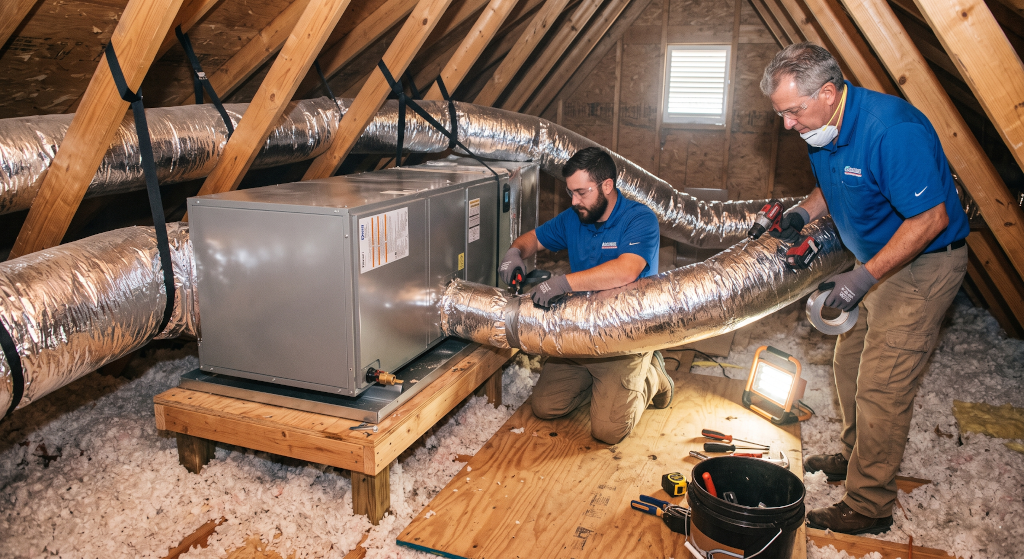
- The Load Calculation (Manual J): A true professional never guesses the size of your new unit based on the old one. They perform an ACCA Manual J calculation. They measure your home's square footage, ceiling height, window quality, and insulation levels to determine the exact heating and cooling load required. An oversized system will short-cycle and leave your house uncomfortably humid.
- Ductwork Inspection (Manual D): The crew inspects your existing sheet metal or flex ducts. If your ducts are undersized, pinched, or leaking heavily into the attic, a new high-efficiency system will choke. Minor modifications are often required.
- Recovery and Tear-Out: The technicians use specialized vacuum pumps to safely recover the old chemical refrigerant into sealed tanks. Releasing Freon into the atmosphere is a severe federal crime. They then dismantle and remove the old heavy equipment.
- Setting the New Equipment: The new indoor air handler or furnace is leveled perfectly. The outdoor condenser is placed on a solid composite or concrete pad. Proper clearance is strictly maintained around the outdoor unit to ensure optimal airflow.
- Brazing and Charging: Copper refrigerant lines are welded (brazed) together while flushing nitrogen through the pipes to prevent internal soot buildup. The system is vacuum-tested for microscopic leaks, then precisely charged with the correct volume of new refrigerant.
- Final Calibration: The thermostat is wired, airflow is tested across all vents, and the temperature drop across the indoor coil is measured to ensure peak performance.
6. How to Hire a Reliable Local HVAC Contractor
The HVAC industry is flooded with high-pressure salespeople who prioritize massive commissions over solving your actual problems. To protect your home and your bank account, you must vet contractors aggressively before signing any contract.
Look for these mandatory qualifications before hiring anyone:
- EPA Section 608 Certification: By federal law, any technician handling, recovering, or purchasing chemical refrigerants must hold a valid EPA certification. Do not let an uncertified worker touch your air conditioner.
- State Licensing and Deep Insurance: Demand proof of a master HVAC license and heavy commercial liability insurance. If a technician improperly wires a 240-volt circuit and causes a house fire, their insurance must cover the total loss.
- NATE Certification: North American Technician Excellence (NATE) is the gold standard for voluntary technician testing. A company employing NATE-certified technicians has proven they invest heavily in continuing education and advanced diagnostic training.
- Detailed Written Proposals: Never accept a verbal quote or a scribble on a napkin. The proposal must clearly list the exact brand, model numbers, SEER2/AFUE ratings, labor warranties, and a firm final price. Beware of contracts that leave room for hidden "unforeseen material costs."
7. Frequently Asked Questions (FAQ)
How much does a full HVAC system replacement cost in 2026?
In 2026, a complete standard split system (air conditioner and gas furnace) typically costs between $6,500 and $12,500 fully installed. High-efficiency variable-speed systems or advanced heat pumps can cost between $10,000 and $18,000. Prices vary widely based on your home size, local labor rates, and whether your ductwork requires heavy modifications.
How long should an air conditioner or furnace actually last?
A standard central air conditioning unit usually lasts 12 to 15 years. A modern gas furnace typically lasts 15 to 20 years. Electric heat pumps function as both heating and cooling units year-round, so they generally have a shorter lifespan of 10 to 15 years. Consistent annual maintenance is strictly required to reach these lifespans.
What is a SEER2 rating and why does it matter?
SEER2 (Seasonal Energy Efficiency Ratio 2) is the updated standard for measuring air conditioning efficiency. It calculates the cooling output over a typical cooling season divided by the total electrical energy input. A higher SEER2 rating means the system requires significantly less electricity to cool your home, leading to lower monthly utility bills.
Should I repair or replace my 15-year-old AC unit?
You should generally replace a 15-year-old AC unit rather than repair it. Units of this age use outdated R-22 or older R-410A refrigerants, making chemical recharges incredibly expensive. Replacing a major component like a compressor on an old unit is not cost-effective. A new unit will immediately lower your energy bills and include a fresh 10-year warranty.