
Every year, millions of homeowners face an incredibly frustrating and costly challenge: pest infestations. From the silent, structural destruction of termites to the severe health risks posed by rodents, pests are never just a minor nuisance. They represent a direct threat to your property value, structural safety, and your family’s physical well-being.
As we navigate through 2026, changing weather patterns and expanding residential developments have drastically altered pest behaviors. This brings entirely new challenges to suburban and urban homes alike across the United States. A mild winter often leads to earlier termite swarms, while heavy summer rains push thousands of subterranean pests directly indoors seeking dry shelter.
If you are noticing the telltale signs of an infestation—such as unexplained droppings, gnaw marks on baseboards, hollow-sounding wood, or actual physical sightings of pests—you must act swiftly. Ignoring the problem allows colonies to multiply exponentially behind your drywall. If you are ready to get help right now, you can get matched with local pest control experts in less than two minutes to request a rapid home inspection.
In this comprehensive guide, we will break down exactly how modern climate shifts trigger infestations and identify the most dangerous household invaders. We will also detail the exact 2026 costs of professional extermination and reveal how to hire trustworthy, local experts anywhere in the country.
1. How Weather and Climate Shifts Trigger Infestations
Pests are highly reactive to their environment. Homeowners frequently wonder why they suddenly have an ant problem after years of a pest-free home. The answer almost always points directly to sudden shifts in the weather.
Heavy Rainfall and Flooding
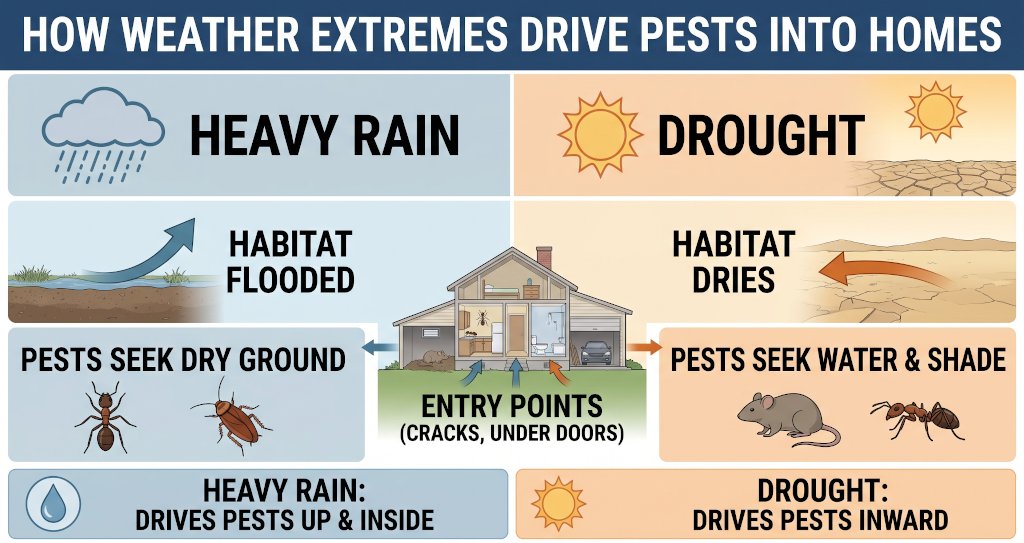
Excessive rain saturates the soil and floods natural underground insect habitats. When the ground becomes waterlogged, pests like ants, centipedes, and cockroaches experience severe hydrostatic pressure. To survive, they immediately migrate upward and indoors, utilizing microscopic cracks in your home's foundation to find dry ground.
Extreme Heat and Drought Conditions
Conversely, extended periods of drought force outdoor pests into survival mode. When natural water sources dry up in the yard, rodents and insects actively seek moisture inside your home. They are drawn to leaky pipes, condensation under sinks, and even the water dishes left out for your pets.
Unseasonably Warm Winters
A hard freeze typically acts as nature's reset button, killing off massive portions of insect populations. When winters are exceptionally mild, pests do not enter deep dormancy. This results in massive spring populations and earlier, much more aggressive breeding cycles for mosquitoes, ticks, and termites.
2. Identifying Common Household Pests & Risk Severity
Before you can effectively treat an infestation, you must understand exactly what you are up against. We categorize common household pests into three main groups based on the type of damage they cause. Accurate identification is the crucial first step to long-term eradication.
Wood-Destroying Insects (High Structural Risk)
These pests are the most financially devastating invaders. They can easily compromise the load-bearing structural integrity of your home if left untreated.
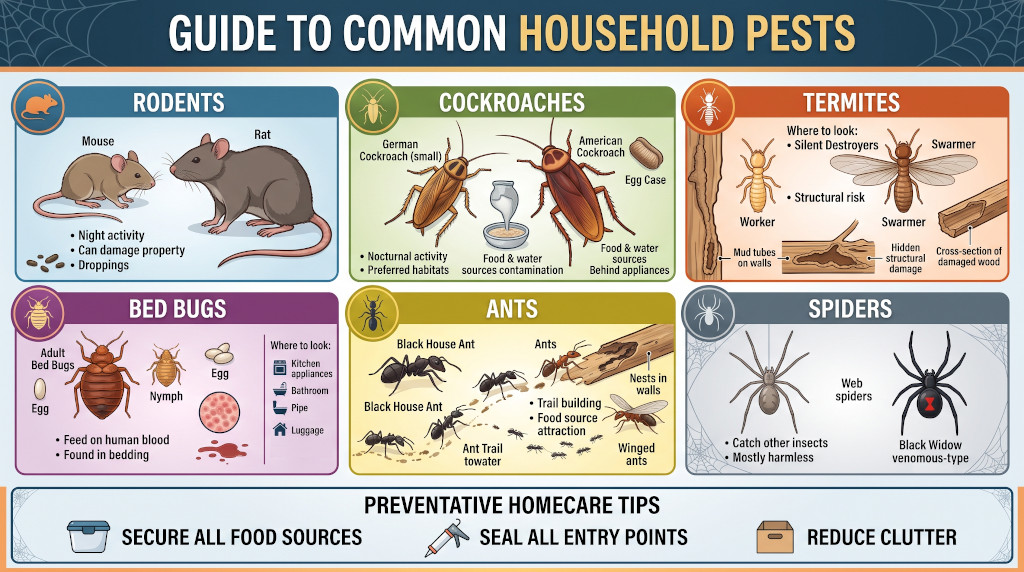
- Termites: Subterranean and drywood termites cause over $5 billion in property damage annually in the U.S. alone. They consume wood from the inside out. Look for discarded wings near windowsills and mud tubes on exterior foundation walls.
- Carpenter Ants: Unlike termites, carpenter ants don’t actually eat wood. They excavate it to build elaborate nesting galleries. You may notice small piles of wood shavings beneath fixtures or hear a faint rustling inside your walls at night.
- Powderpost Beetles: These small beetles lay eggs inside untreated wood. Once hatched, the larvae reduce the wood to a fine powder as they eat their way out, severely damaging antique furniture and structural framing.
Disease Vectors (High Health Risk)
These pests present an immediate and serious risk to human and pet health. They carry and transmit dangerous pathogens directly into your living spaces.
- Rodents (Mice and Rats): Rodents are highly destructive. They contaminate food supplies and spread diseases like Hantavirus and Leptospirosis through their droppings. They also frequently cause electrical fires by chewing on internal wall wiring.
- Cockroaches: Highly resilient and rapid breeders, roaches are known to trigger severe asthma attacks, especially in young children. They spread dangerous bacteria like E. coli and Salmonella across your kitchen counters.
- Ticks and Mosquitoes: Found breeding in the yard, these outdoor pests are notorious vectors for serious illnesses. They easily transmit Lyme disease, West Nile virus, and Zika virus with a single bite.
Nuisance Pests (Low to Moderate Risk)
While generally less dangerous, these pests multiply quickly. They can cause significant distress, painful bites, and major disruption in the home.
- Ants: Odorous house ants and pavement ants are mostly a nuisance, but they swarm food sources by the thousands. They leave invisible pheromone trails that are notoriously difficult to eliminate without professional baits.
- Spiders: Most household spiders are beneficial. However, venomous species like the Brown Recluse or Black Widow require immediate professional removal to protect children and pets from dangerous bites.
- Bed Bugs: Bed bugs cause immense psychological distress and itchy bites. They are expert hitchhikers and incredibly difficult to eradicate without specialized professional thermal heat treatments.
3. Eco-Friendly & Pet-Safe Pest Control Options
Many homeowners hesitate to hire an exterminator because they fear toxic chemicals. In 2026, the industry has evolved drastically. You no longer have to choose between protecting your home from pests and keeping your children and pets safe from harsh pesticides.
Integrated Pest Management (IPM)
The best modern exterminators utilize Integrated Pest Management (IPM). This approach heavily prioritizes long-term prevention over constant chemical spraying. Technicians focus on sealing entry points, eliminating standing water, and removing food sources. Pesticides are used only as a last resort, drastically reducing overall chemical exposure in your home.
Botanical and Plant-Based Sprays
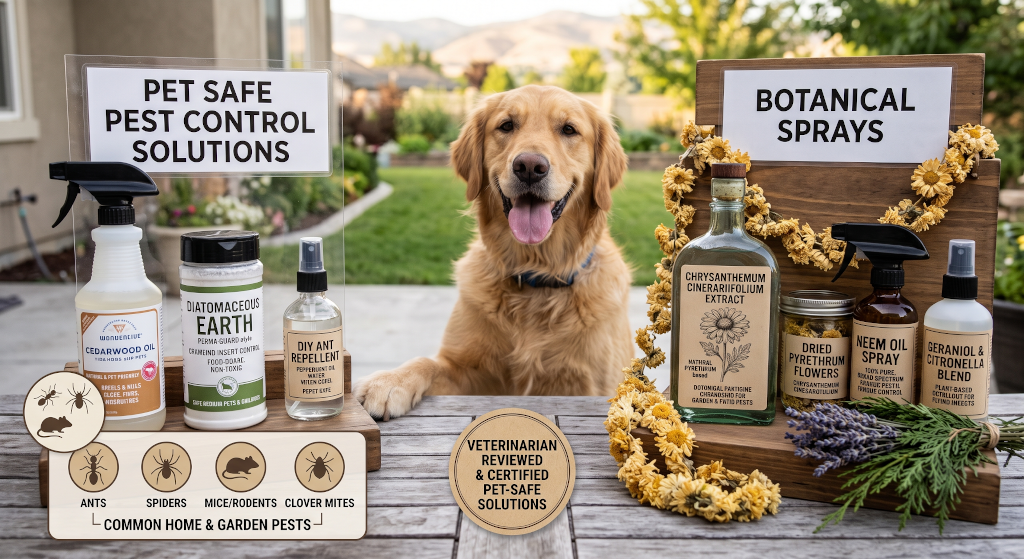
Instead of synthetic neurotoxins, many companies now use highly effective botanical sprays. Products containing pyrethrins (derived from chrysanthemum flowers) or concentrated essential oils like peppermint and rosemary are lethal to insects. However, they break down quickly and are generally completely harmless to mammals once dry.
Enclosed Baiting Systems
Broadcast spraying baseboards inside the house is a largely outdated practice. Today, professionals use enclosed bait stations specifically for ants, roaches, and rodents. The toxic bait is locked inside a tamper-proof plastic housing. Pests enter, consume the bait, and die, while your dogs, cats, and toddlers cannot physically reach the active ingredients.
4. DIY Pest Control vs. Professional Extermination
When faced with a bug problem, many homeowners rush to the local hardware store to buy off-the-shelf sprays and aerosol foggers. While Do-It-Yourself (DIY) methods have a time and place, they frequently fall drastically short of solving a true infestation.
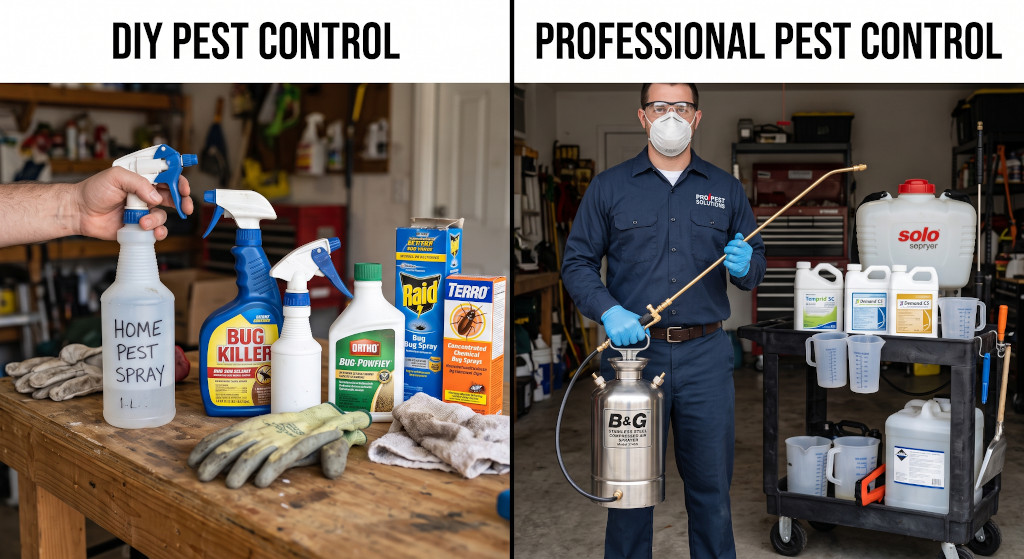
When DIY Methods Actually Work
DIY pest control is strictly suitable for minor, highly isolated incidents. For example, setting a basic snap trap after seeing a single mouse in the garage during winter. Over-the-counter perimeter sprays can also be somewhat effective as a very basic seasonal deterrent if applied meticulously.
The Major Risks of DIY Failure
Relying exclusively on DIY for major infestations often leads to increased frustration and massively elevated long-term repair costs.
- Chemical Resistance: Misusing store-bought pesticides causes insects to build biological resistance. This creates "super bugs" that make future professional treatments much more difficult and expensive.
- Treating the Symptom, Not the Source: Spraying worker ants in the bathroom does absolutely nothing to eliminate the egg-laying queen hidden deep inside your wall voids.
- Hidden Financial Costs: Repeatedly buying traps, sprays, and baits that fail often ends up costing far more than hiring a professional in the first place.
The Professional Advantage
If you are dealing with aggressive wood-destroying insects or resilient invaders, you need a trained pro. Professional pest control operators have access to commercial-grade, highly targeted treatments that consumer products cannot match. They also offer robust service guarantees.
5. Comprehensive Pest Control Cost Breakdown (2026 Data)
A primary concern for homeowners is understanding exactly how much pest control costs. Pricing is highly variable based on your home's square footage, geographic region, and the specific pest species involved. Below is a detailed breakdown of average national costs for 2026.
| Type of Service | Average Cost Range | Frequency / Notes |
|---|---|---|
| One-Time General Extermination | $150 – $350 | Best for sudden, minor infestations (spiders, occasional invaders). Usually includes a standard 30-day retreat guarantee. |
| Quarterly Maintenance Plan | $100 – $175 per visit | Year-round protection encompassing the exterior perimeter. Highly recommended to stop pests before they enter. |
| Termite Treatment | $800 – $2,500+ | Depends heavily on linear footage of the foundation. Includes in-ground baiting systems or liquid trench barriers. |
| Bed Bug Extermination | $1,000 – $3,000 | Requires complex whole-home heat treatment or intensive multi-visit chemical routing. Charged per room. |
| Rodent Exclusion | $350 – $1,200 | Includes permanently sealing structural entry points (exclusion) and setting industrial-grade commercial traps. |
Note: The prices above represent national averages. Local market rates in high cost-of-living urban areas will vary. To obtain accurate, competitive pricing for your specific zip code, you must request localized bids.
6. Year-Round Seasonal Pest Prevention Checklist
The absolute best way to save money on expensive extermination is to prevent pests from gaining access in the first place. Because pests are biologically active at different times, your prevention strategy must adapt seasonally.
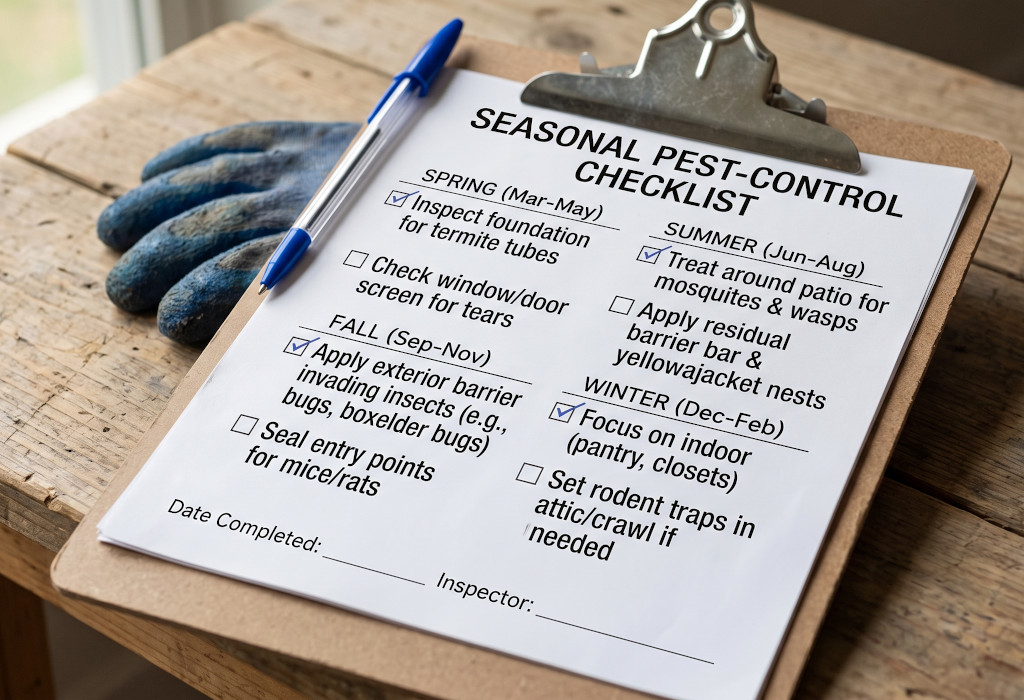
Spring (The Awakening)
As ground temperatures rapidly rise, insects emerge from dormancy eager to breed. This is the peak swarming season for destructive termites.
- Seal Entry Points: Use high-quality silicone caulk to meticulously seal cracks around doors, basement windows, and utility pipes.
- Clear Standing Water: Empty gutters, birdbaths, old tires, and toys. Mosquitoes require just a bottle cap's worth of water to multiply.
- Schedule an Inspection: Ensure your home is protected before spring swarmers establish massive new colonies inside your walls.
Summer (Peak Activity)
Intense heat and humidity bring out massive populations of ants, wasps, hornets, and disease-carrying flies.
- Trim Vegetation: Keep bushes and tree branches trimmed back at least two feet from your siding. Branches act as bridges that allow roof rats to bypass ground-level treatments.
- Secure Trash Receptacles: Keep all outdoor garbage cans tightly sealed with locking lids to instantly deter raccoons and flies.
- Maintain Landscaping Mulch: Keep decorative wood mulch 15 inches away from your foundation to prevent the moisture build-up that heavily attracts termites.
Fall (Seeking Shelter)
As the weather cools, field mice, spiders, and stink bugs aggressively look for warm, safe places to survive the winter.
- Install Heavy-Duty Door Sweeps: Ensure there are absolutely no gaps under exterior doors. If you can slide a pencil under a door, a mouse can squeeze right through it.
- Check Vents and Chimneys: Ensure attic and crawlspace vents have intact, rust-proof mesh screens to block bats and squirrels.
- Store Firewood Properly: Keep firewood elevated off the ground and stored at least 20 feet away from the side of the house.
Winter (Indoor Harboring)
Pests that successfully infiltrated your home during the fall will rapidly multiply in the warmth of your heating system.
- Organize Clutter: Rodents love dark, undisturbed areas. Store seasonal items in tightly sealed plastic bins rather than chewable cardboard boxes.
- Inspect Incoming Deliveries: Before bringing holiday packages or groceries inside, briefly inspect them for hitchhiking cockroaches.
7. How to Choose and Hire a Reliable Pest Control Expert
If you've decided it is time to bring in the professionals, selecting the right company is absolutely critical. You want to ensure the technician entering your home is highly qualified, adequately insured, and trustworthy.
Our platform takes calls from anywhere in the United States and immediately connects you with highly vetted local professionals in your specific zip code. Here is exactly what you should expect when you hire an exterminator through our national network:
- State Licensing Verification: Every state strictly requires exterminators to be licensed. We ensure the professionals in our network hold valid applicator certifications.
- Comprehensive Insurance: Reputable companies carry general liability and workers' compensation to fully protect you financially during treatments.
- Clear Service Guarantees: Always ask about retreat guarantees. Top professionals will return for free if the pests come back within 30 days of the initial treatment.
Take Action Today
Dealing with a persistent pest infestation feels incredibly overwhelming, but you do not have to fight it alone. By understanding pest risks and implementing a rigorous seasonal prevention strategy, you can protect your home's structural integrity.
If you are exhausted from fighting a losing battle with ineffective store-bought sprays, it is time to bring in the experts. At Quotes With Joe, we make it incredibly fast and easy to connect with licensed pest control professionals in your exact area. Do not let unwanted pests destroy your property—take decisive action today and reclaim your home.