
Your roof is your home’s first line of physical defense against the elements. Yet, because it sits largely out of sight, it frequently remains entirely out of mind. Homeowners routinely ignore minor issues until standing water suddenly starts dripping directly through the ceiling drywall.
In 2026, navigating a roof replacement is about much more than just keeping the rain out. Changing climate patterns constantly introduce extreme weather events across the country. Combine this with increasingly strict municipal building codes and a vast array of new material technologies, and replacing your roof is arguably the most critical structural investment you will ever make.
Delaying necessary repairs or a full structural replacement leads directly to catastrophic, cascading damage. A tiny, seemingly minor leak will silently rot your wooden decking over time. It deeply compromises your attic insulation, introduces toxic black mold into your HVAC system, and aggressively degrades your property's resale value.
If you already know your roof has reached the end of its natural lifespan or you have just sustained severe storm damage, time is absolutely of the essence. Do not wait for structural rot to set in. You can get matched with vetted, local roofing experts right now to schedule a rapid inspection and secure competitive bids.
For homeowners still researching their long-term options, this highly detailed guide walks you through exactly what you need to know today. We explain how to identify critical signs of failure, break down current material costs, decode insurance claims, and teach you how to hire a reputable contractor while safely avoiding common industry scams.

1. Signs You Need a Roof Replacement vs. Minor Repairs
Knowing exactly when to repair a few damaged shingles versus tearing off the entire roof is a common, highly stressful dilemma. While a professional inspection is always required for a definitive answer, there are several visual cues you can safely identify yourself from the ground.
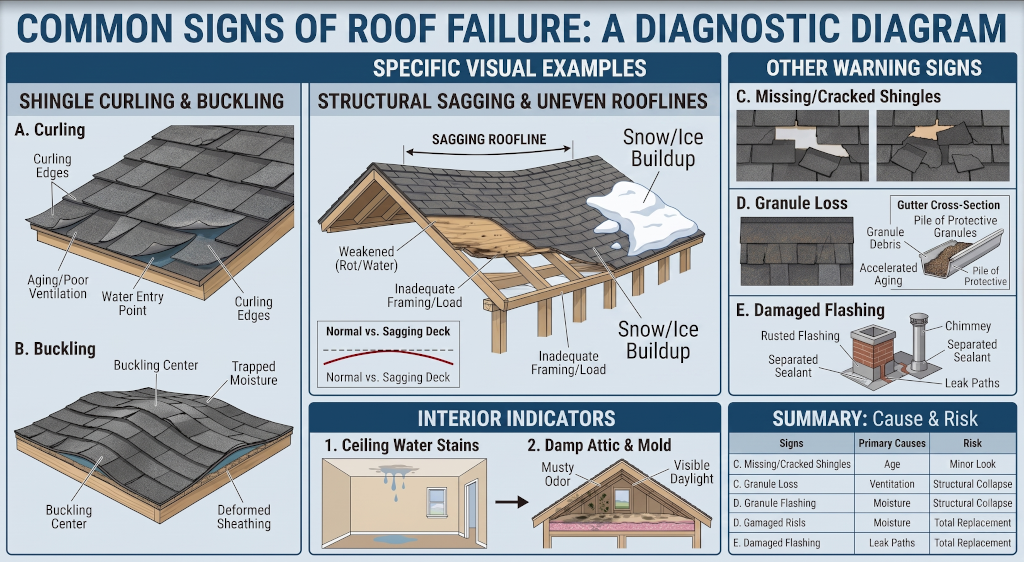
When a Minor Repair is Usually Sufficient
- Isolated Wind Damage: If a recent windstorm blew off three or four shingles on a relatively young roof (under 10 years old), a contractor can likely patch that specific area without tearing off the entire field.
- Minor Flashing Issues: The metal flashing around your chimneys, skylights, and vent pipes naturally pulls away over time. If the surrounding shingles are structurally sound, replacing just the flashing and resealing the metal is a cost-effective repair.
- Punctures from Small Branches: A localized puncture from falling tree debris can usually be patched easily if the structural plywood decking beneath isn't severely shattered.
When a Full Tear-Off and Replacement is Necessary
- Curling, Cupping, or Clawing Shingles: If your shingles look like they are bending upward at the edges or curling heavily in the middle, they have completely lost their structural integrity. This proves advanced age or severe attic ventilation issues baking the shingles.
- Massive Granule Loss: Asphalt shingles are coated with crushed mineral granules that deflect UV rays and provide crucial fire resistance. If you check your gutters and find a heavy accumulation of what looks like coarse black sand, your shingles are rapidly deteriorating.
- A Sagging Roof Deck: Step back to the curb and carefully look at the ridgeline of your roof. If it dips, droops, or sags visibly, you have a major structural emergency. This immediately indicates that the load-bearing trusses or plywood decking have rotted.
- Interior Water Stains and Mold: If you see expanding brown rings on your ceiling drywall or notice a musty smell in your attic accompanied by dark streaks on the wooden rafters, water is actively penetrating the vapor barrier.
2. Comprehensive Roofing Materials & 2026 Cost Breakdown
The total cost of replacing a residential roof has shifted notably by 2026 due to material supply chain adjustments and ongoing skilled labor shortages. The single most significant factor dictating your final bill is the specific type of roofing material you choose.
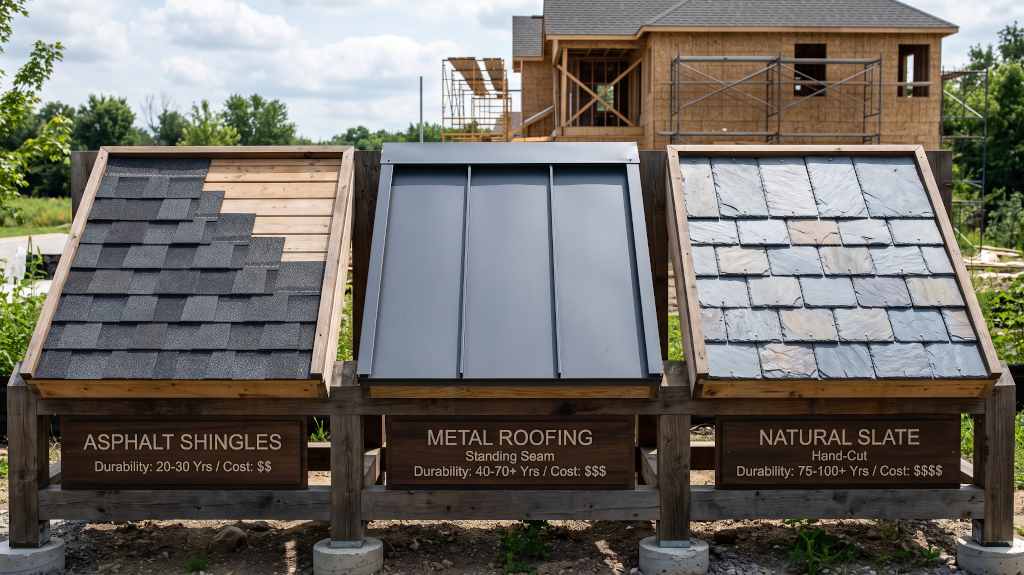
Below is a highly detailed breakdown of the most common materials, their pros and cons, and expected costs for an average 2,000-square-foot home.
| Roofing Material | Estimated Cost per Square (100 sq ft) | Average Total Cost (2,000 sq ft) | Expected Lifespan |
|---|---|---|---|
| 3-Tab Asphalt Shingles | $350 – $550 | $7,000 – $11,000 | 15 - 20 Years |
| Architectural Asphalt Shingles | $450 – $700 | $9,000 – $14,000 | 25 - 30 Years |
| Standing Seam Metal | $900 – $1,500 | $18,000 – $30,000 | 40 - 70 Years |
| Clay or Concrete Tile | $1,000 – $1,800 | $20,000 – $36,000 | 50 - 100+ Years |
| Natural Slate | $1,200 – $2,500+ | $24,000 – $50,000+ | 100+ Years |
*Note: A "square" is a standardized roofing industry term equaling exactly 100 square feet. Costs strictly include standard labor and tear-off, but vary based on local markets and roof pitch complexity.
Asphalt Shingles (The American Standard)
Over 75% of American homes utilize asphalt shingles. Standard 3-tab shingles are the most budget-friendly but completely lack visual depth and have a shorter lifespan. Architectural (dimensional) shingles are thicker, successfully mimic the look of wood shake, and offer vastly superior wind warranties.
Standing Seam Metal
Metal roofing has aggressively surged in popularity, particularly in geographical areas highly prone to wildfires and heavy snow. Standing seam metal features strictly concealed fasteners, meaning there are zero exposed screws to degrade and leak. It is highly energy-efficient and effectively sheds heavy winter snow.
Clay and Concrete Tile
Ubiquitous in the Southwest, Florida, and California, heavy clay tiles are incredibly resistant to intense heat, salt air, and rot. However, they are exceptionally heavy. If you are transitioning from lightweight asphalt directly to clay tile, a structural engineer must assess your framing to ensure it can support the massive weight increase.
3. Understanding Roof Ventilation: Preventing Mold and Energy Loss
Homeowners frequently focus entirely on the shingles and ignore the most critical component of a healthy roof: ventilation. Without a properly balanced ventilation system, even the most expensive luxury shingles will rapidly fail.
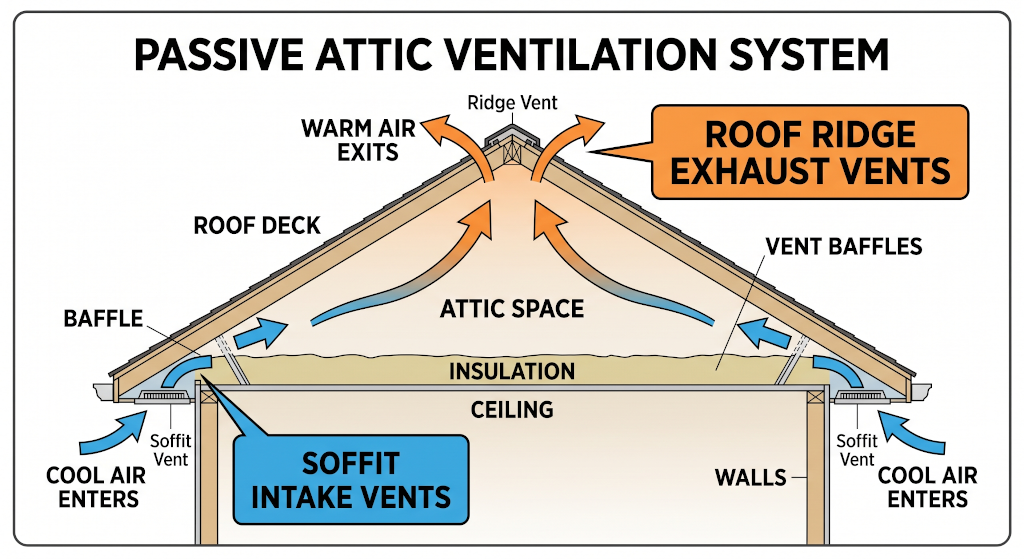
The Science of Airflow
A roof breathes by pulling cool, fresh ambient air in through the bottom edge (soffit vents) and pushing hot, stale air out through the top (ridge vents or box vents). This continuous, passive cycle prevents dangerous temperature extremes inside your attic space.
Summer Dangers: Cooking the Shingles
During a hot summer, a poorly ventilated attic can easily reach temperatures exceeding 150 degrees Fahrenheit. This intense, trapped heat bakes the underside of your roof deck. It literally cooks your asphalt shingles from the inside out, causing them to aggressively blister, curl, and fail a decade before their warranty expires.
Winter Dangers: Ice Dams and Mold
In winter, warm air escaping your living space enters the attic and hits the freezing roof deck, creating severe condensation. Without ventilation to remove this moisture, toxic black mold rapidly grows on your wooden rafters. Furthermore, this trapped heat melts snow on the roof prematurely, leading to massive, destructive ice dams at the gutters.
When you hire a professional roofing contractor, insist they calculate your net free area (NFA) to guarantee your new intake and exhaust vents are perfectly balanced.
4. The Roof Replacement Process: Step-by-Step
Understanding the exact construction process helps alleviate the massive stress of turning your quiet home into an active, loud job site. A typical asphalt roof replacement on an average suburban home takes exactly 1 to 3 days to complete.
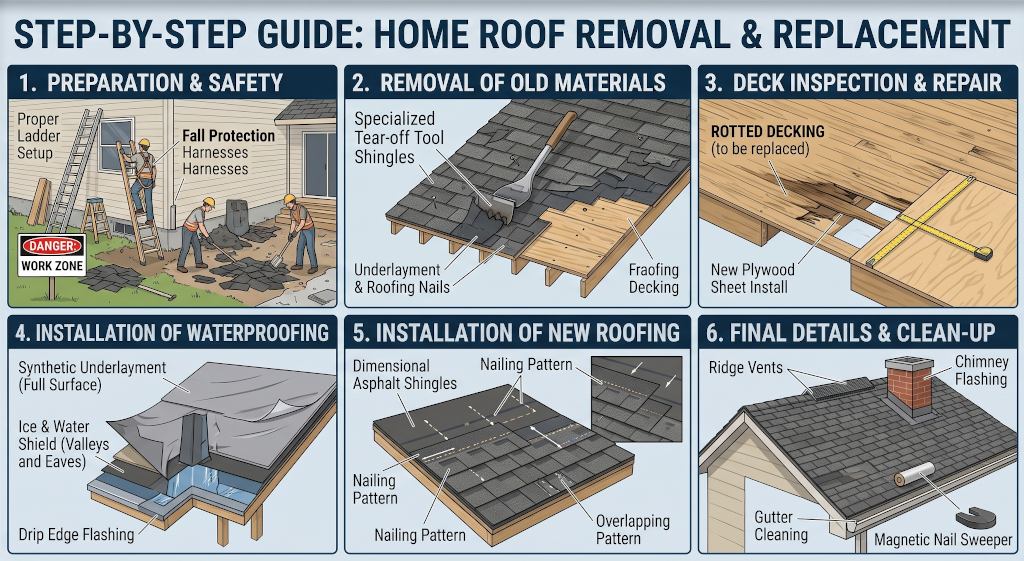
- Property Protection and Dumpster Arrival: A reputable crew always begins by placing a large roll-off dumpster carefully in your driveway. They strictly drape heavy tarps over your valuable landscaping, bushes, and air conditioning units to catch falling debris and stray nails.
- The Tear-Off: The crew uses specialized tear-off shovels to aggressively strip away the old shingles, underlayment, and thousands of nails right down to the bare wooden decking.
- Decking Inspection and Repair: This is a highly critical step. The foreman will physically walk the bare roof to inspect the plywood decking. Any rotted, soft, or damaged wood must be cleanly removed and replaced to ensure the heavy new roof has a solid structural foundation.
- Applying the Underlayment and Ice/Water Shield: An adhesive ice and water shield is applied directly to highly vulnerable areas like the eaves, valleys, and around chimneys to actively prevent winter leaks. A synthetic underlayment is then rolled tightly across the entire deck.
- Shingle and Flashing Installation: Starting directly from the bottom edge, the crew precisely installs starter shingles, followed by the overlapping main field shingles. Brand new metal flashing is integrated securely into the valleys and around penetrations.
- Final Cleanup and Magnetic Sweep: The crew pulls down the protective tarps, sweeps the gutters clear, and meticulously rolls heavy industrial magnets across your lawn and driveway to pick up hundreds of hidden, dangerous nails.
5. Navigating Homeowners Insurance and Roof Claims
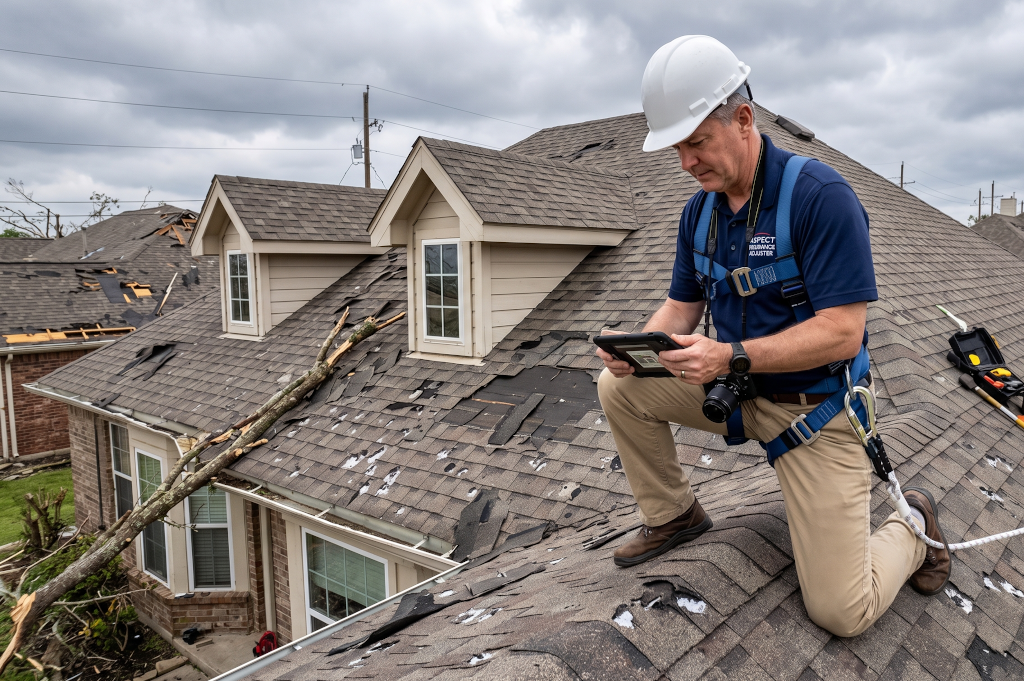
Replacing a roof entirely out of pocket is incredibly expensive. Fortunately, if your roof sustained severe damage during a sudden weather event, your homeowners insurance policy should cover the massive cost. However, navigating the claims process requires caution.
What Insurance Actually Covers
Policies generally only cover "Acts of God" or sudden, accidental damage. This strictly includes severe hailstorms, massive wind events, and heavy trees falling directly onto the structure. They absolutely will not cover a roof replacement due to normal age, wear and tear, or a homeowner's failure to maintain the property.
The Adjuster Process
After a storm, you must file a claim promptly. The insurance company sends a licensed adjuster to physically inspect the damage. It is highly recommended that you have your own chosen roofing contractor present during this exact inspection. Your contractor can point out subtle, easily missed hail damage that the insurance adjuster might overlook.
Avoiding Insurance Scams
Be incredibly wary of predatory contractors who demand you sign an Assignment of Benefits (AOB) form before they even inspect the roof. An AOB legally transfers all your insurance rights directly to the contractor, allowing them to bill your insurance company indiscriminately while delivering subpar work. Always retain control of your own claim.

6. Decoding Roof Warranties: Manufacturer vs. Workmanship
A new roof is a massive financial investment, and protecting that investment requires understanding the fine print. A brand new roof always comes with two entirely distinct types of warranties, and you must verify both before signing a contract.
The Manufacturer’s Warranty
This strictly covers the physical materials. If the shingles fail prematurely due to a factory defect, the manufacturer covers the cost of replacement materials. Look closely at whether the warranty is prorated. A prorated warranty slowly loses its value over time, whereas a non-prorated warranty covers the full replacement cost for the designated period.
The Contractor’s Workmanship Warranty
This covers the actual human labor and installation process. The vast majority of early roof failures are caused by improper installation, not defective materials. If a worker drives a nail at the wrong angle and it leaks two years later, the manufacturer will deny the claim. You rely entirely on the contractor's workmanship warranty to fix the problem for free.
7. How to Choose and Hire a Reliable Local Roofing Contractor
The roofing industry is unfortunately known for a high rate of fly-by-night operators, especially immediately following severe weather events. To guarantee a high-quality installation that will easily last decades, you must aggressively vet your contractor.
When you hire a local roofing professional, demand the following non-negotiable criteria:
- Verify License and Insurance: The contractor must be strictly licensed in your specific state. More importantly, they must provide active physical proof of General Liability and Worker’s Compensation insurance. If a roofer falls off your roof and lacks coverage, you could be personally sued for massive medical bills.
- Manufacturer Certifications: Look for contractors who have achieved highly elite status with major manufacturers (e.g., GAF Master Elite or Owens Corning Platinum Preferred). Manufacturers only grant these titles to a tiny percentage of roofers who strictly pass rigorous financial and training checks.
- Avoid "Storm Chasers": Be highly skeptical of door-to-door salesmen who magically appear in your neighborhood the day after a severe hailstorm. They frequently use cheap materials, perform rushed labor, and quickly disappear back to their home state before leaks appear. Always choose an established company with a physical office address.
- Get Everything in Writing: The final contract must thoroughly detail the specific brand of materials being used, the exact scope of work, cleanup protocols, and the payment schedule. Never pay 100% of the cost upfront.
8. Frequently Asked Questions (FAQ)
Does homeowners insurance cover a full roof replacement?
Homeowners insurance typically covers a full roof replacement if the damage was caused by a sudden, accidental event covered by your policy, such as a severe hailstorm, fallen tree, or hurricane. It generally does not cover replacement due to normal wear and tear, age, or lack of proper maintenance. You will need to file a claim and have an adjuster inspect the damage before approval.
How long does a typical roof replacement take?
For an average-sized single-family home, a professional roofing crew can usually complete an asphalt shingle roof replacement in exactly 1 to 3 days. More complex materials like heavy slate or custom metal, or houses with steep pitches and complex rooflines, can easily take a week or longer. Weather conditions also play a critical role in the timeline.
Should I install a new roof over old shingles (re-roofing)?
While adding a second layer of shingles can save money on initial tear-off and disposal costs in the short term, it is generally not recommended by experts. Re-roofing strictly prevents contractors from inspecting the wooden roof deck for underlying rot, adds significant structural weight to your home framing, and frequently voids the manufacturer warranty of the new shingles.
What is the best roofing material for energy efficiency?
Standing seam metal roofing is widely considered the absolute best for energy efficiency. Metal highly reflects solar radiant heat, which can directly reduce summer cooling costs by up to 25% in warm climates. Additionally, there are highly reflective cool roof asphalt shingles available designed specifically with specialized granules to safely reflect harsh UV rays.