
Water damage is the most destructive force a homeowner can face. It happens instantly, without warning, and aggressively attacks the structural integrity of your property. A burst pipe or a failed water heater can flood your living space with hundreds of gallons of water in minutes.
When water strikes, the clock starts ticking immediately. Water aggressively absorbs into drywall, baseboards, and underlying floor joists. Left untreated, even a small leak will compromise your home's structural framing. You cannot afford to wait and see if the area dries out on its own.
In 2026, restoration technology has advanced rapidly, but speed remains the deciding factor. You must extract the standing water and deploy professional-grade dehumidifiers immediately to prevent catastrophic mold growth. You must treat this as a true emergency.
If you currently have standing water in your home, stop reading this guide. You must get matched with a 24/7 emergency mitigation professional right now. Every single hour you delay drastically increases your repair costs and the risk of toxic mold.
For homeowners assessing recent damage or preparing for future repairs, this guide delivers critical facts. We will break down exactly how to stop the damage, explain the costs of restoration, and show you how to navigate tricky insurance claims.

1. The Critical First 24 Hours: Emergency Mitigation
Your actions during the first few hours of a water event dictate the total cost of the disaster. Panic leads to poor decisions. You must act methodically to secure your property and your family's physical safety.
Immediate Actions to Stop the Bleeding
If water is actively flooding your home, you must cut the supply immediately. Locate your main water shut-off valve, typically found in a basement, garage, or utility closet, and turn it off. Next, shut off the electricity to the affected areas at the main breaker panel to eliminate the massive risk of electrocution.
Never walk into flooded basements if the power is still active. Once the environment is safe, move valuable furniture and electronics out of the wet zones. Prop up upholstered items on aluminum foil or plastic blocks to prevent wood stains from permanently bleeding into wet carpets.
Why DIY Extraction Fails
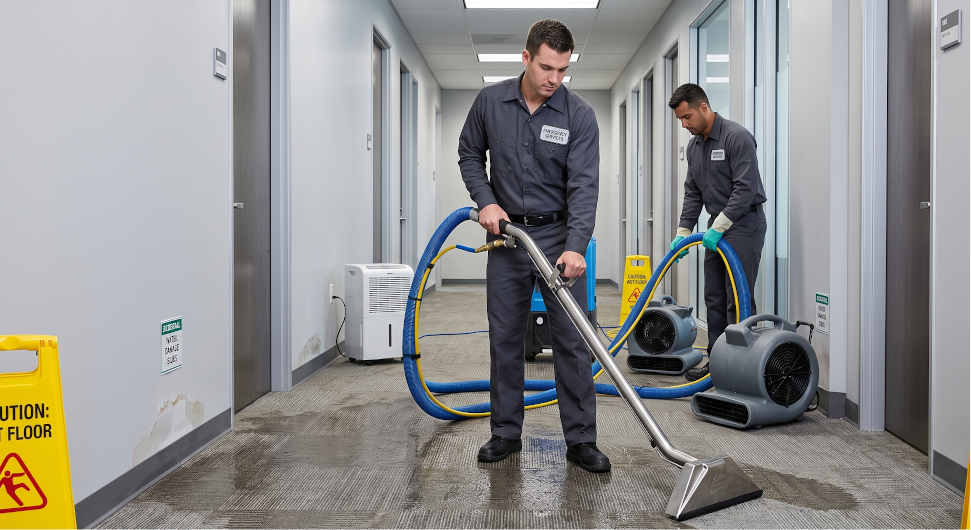
Many homeowners grab a standard wet/dry shop vacuum and a few box fans, hoping to dry the area themselves. This is a massive mistake. A shop vacuum only removes surface water. It cannot pull water out of the carpet padding, subfloor, or the interior cavities of your drywall.
Professional mitigation teams use powerful truck-mounted extraction units. They deploy high-velocity air movers and industrial desiccant dehumidifiers that force trapped moisture out of the building materials. Trying to dry a major leak yourself guarantees hidden rot and mold.
2. Understanding the Threat: The Three Categories of Water Damage
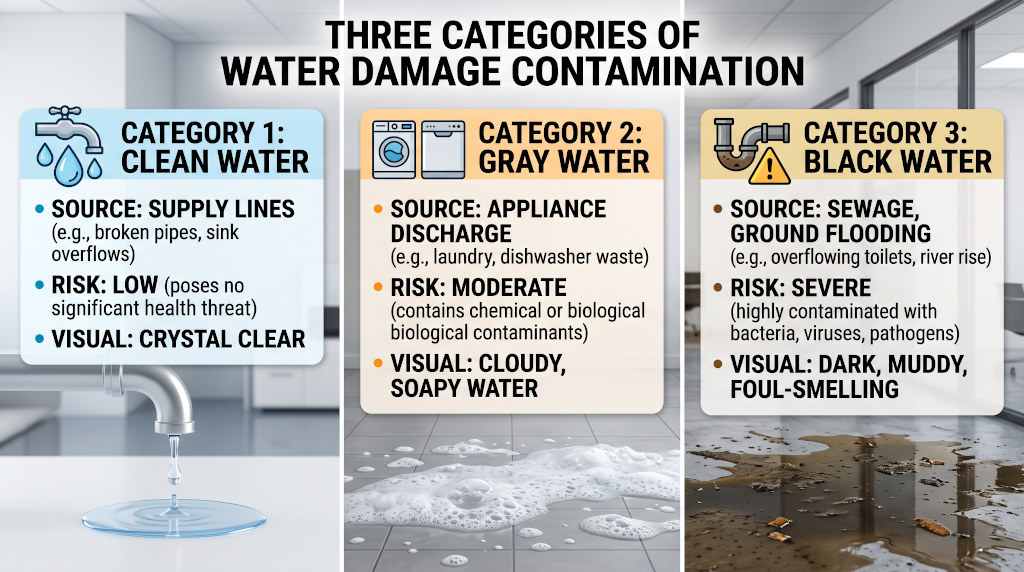
Not all water damage is equal. The restoration industry categorizes water based on its contamination level. This category dictates exactly how the cleanup must be handled and what materials must be completely thrown away.
Category 1: Clean Water
Clean water comes from a sanitary source. Examples include a broken water supply line, an overflowing bathtub, or a leaking refrigerator ice maker. If caught quickly, carpets and drywall can often be dried and saved. However, if left untreated for 48 hours, clean water degrades into Category 2 as bacteria begins to multiply.
Category 2: Gray Water
Gray water contains significant biological or chemical contamination that can cause illness. This includes discharge from dishwashers, washing machines, or sump pump failures. Carpet padding exposed to gray water must be strictly discarded. The remaining surfaces require specialized antimicrobial treatments during the drying phase.
Category 3: Black Water
Black water is highly toxic and contains raw sewage, heavy metals, or ground floodwaters. A toilet backing up with feces or a river flooding into your basement are Category 3 disasters. This water carries severe pathogens and deadly bacteria. All porous materials, including drywall, carpets, and baseboards, must be aggressively torn out and destroyed. Only a certified hazmat team should handle this cleanup.

3. The 2026 Water Damage Restoration Cost Breakdown
Restoration costs depend heavily on the category of water, the size of the footprint, and how long the water sat untouched. Emergency mitigation is just phase one. Phase two is the actual reconstruction of the damaged areas.
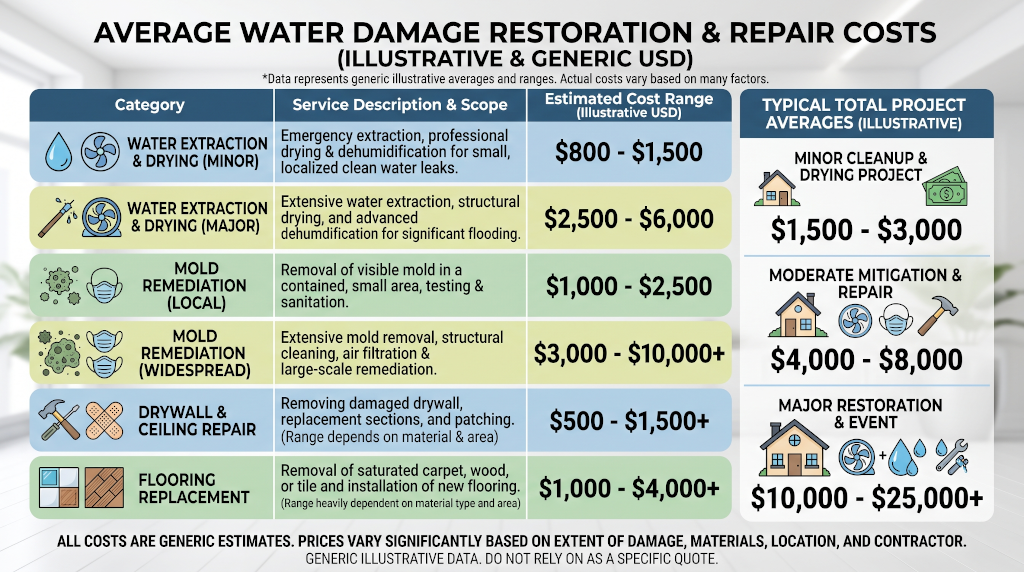
Below is a realistic national average cost breakdown for water damage restoration in 2026. These numbers reflect professional extraction, structural drying, and basic material replacement.
| Damage Category | Estimated Cost per Sq. Ft. | Average Total Cost (Standard Room) | Required Tear-Out Level |
|---|---|---|---|
| Category 1 (Clean Water) | $4.00 – $6.00 | $1,200 – $2,500 | Minimal. Drying usually sufficient if fast. |
| Category 2 (Gray Water) | $5.50 – $8.50 | $2,500 – $4,500 | Moderate. Carpet padding and lower drywall. |
| Category 3 (Black Water) | $8.00 – $14.00 | $4,500 – $8,500+ | Severe. All porous materials destroyed. |
| Major Basement Flood | Varies | $10,000 – $25,000+ | Complete gut to the concrete studs. |
*Note: Costs cover mitigation and basic reconstruction. Upgrading to luxury finishes or discovering massive mold colonies behind walls will push these figures significantly higher.
Mitigation vs. Reconstruction
Mitigation strictly involves stopping the water, tearing out ruined materials, and drying the framing. It is the demolition phase. Reconstruction is the process of putting your house back together with new drywall, paint, and flooring. Many companies offer both services, but you are never legally required to use the mitigation company for the final rebuild.
4. The Hidden Enemy: Black Mold and Structural Rot
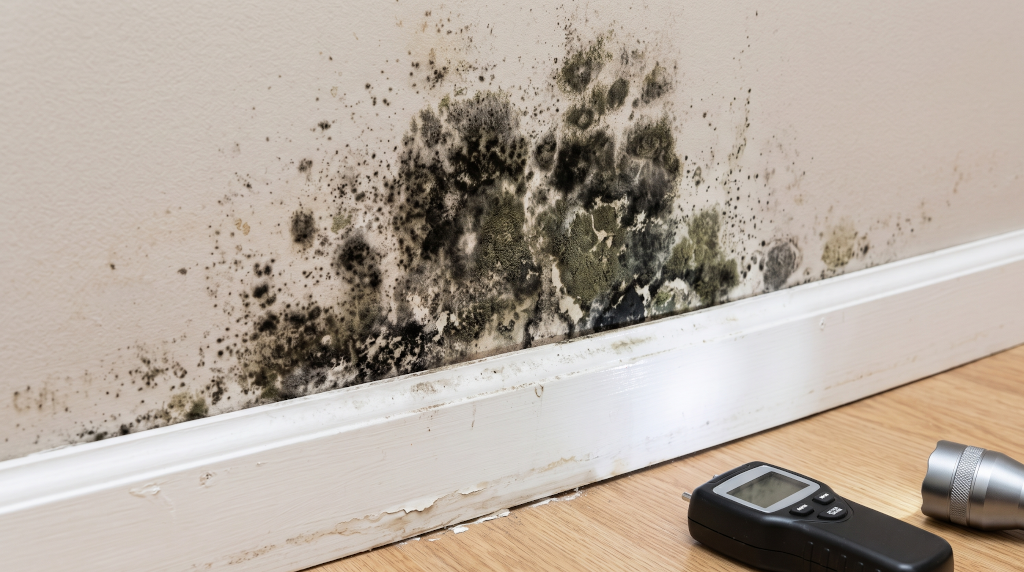
Water is dangerous, but the secondary damage is often worse. Black mold (Stachybotrys chartarum) thrives in dark, damp environments. It feeds aggressively on the cellulose found in your drywall paper and wood framing.
The 48-Hour Window
Under the right conditions, toxic mold begins to colonize within 48 hours of a water event. Once mold establishes a foothold inside your wall cavities, simple drying is no longer an option. You must transition from a water damage claim to a full mold remediation project.
Mold remediation requires erecting heavy plastic containment barriers, establishing negative air pressure with HEPA scrubbers, and physically scrubbing the fungal growth off the wood studs. This process easily adds $3,000 to $6,000 to your total bill.
Protecting Your Health
Airborne mold spores cause severe respiratory distress, chronic coughing, and dangerous allergic reactions, especially in children and the elderly. If you smell a persistent musty odor weeks after a leak, you absolutely have hidden mold. You must hire an independent hygienist to test your indoor air quality immediately.
5. Rebuilding and Renovation: Turning Disaster into an Upgrade
A severe water leak forces you to tear out massive sections of your home. While devastating, this presents a unique opportunity. You are already paying for the demolition. You can use the insurance payout as the baseline budget to completely modernize the space.
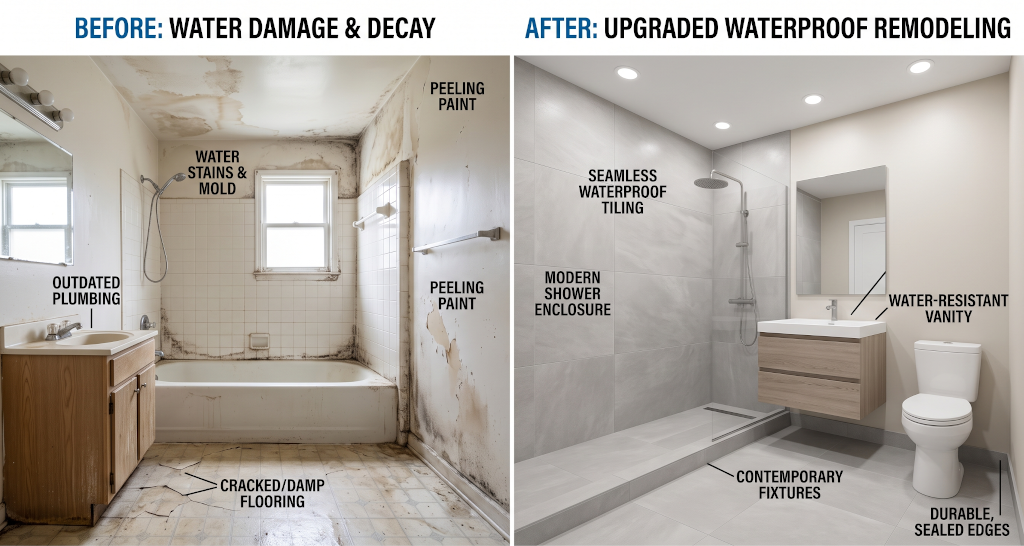
- Upgrading Flooring: Never install standard laminate or carpet in wet zones again. Use this opportunity to upgrade to 100% waterproof Luxury Vinyl Plank (LVP) or premium porcelain tile. These materials survive future leaks without damage.
- Modernizing Bathrooms: If a toilet overflow destroyed your master bathroom, do not just replace the vanity. Consider expanding the shower footprint, upgrading to modern fixtures, and installing mold-resistant green board behind the tile.
- Preventative Plumbing: While the walls are open, ask your contractor to replace old galvanized pipes or cheap plastic supply lines with robust PEX piping and braided steel hoses.

6. Navigating Homeowners Insurance Claims
Dealing with insurance adjusters after a disaster is incredibly stressful. Insurance companies exist to minimize their payouts. You must thoroughly document the damage before the tear-out begins to ensure you receive fair compensation.
What Is Actually Covered?
Standard homeowners insurance covers "sudden and accidental" water damage. This covers burst frozen pipes, ruptured washing machine hoses, and sudden water heater failures. However, standard policies explicitly exclude flood damage from rising exterior water (like storm surges). You need a separate FEMA flood policy for that.
Furthermore, insurance absolutely denies claims for gradual damage. If a tiny leak under your kitchen sink rotted the floor over six months because you ignored it, you will pay out of pocket. Maintenance is always the homeowner's strict responsibility.
The Importance of Independent Documentation
Do not wait for the adjuster to arrive before starting emergency mitigation. The insurance company expects you to mitigate further damage immediately. Take hundreds of clear photos and detailed videos of the standing water, ruined furniture, and the exact source of the leak.
Hire a certified restoration contractor who uses standardized Xactimate software to bill the insurance company directly. This software uses uniform pricing codes accepted by all major carriers, preventing the adjuster from lowballing the repair costs.
7. How to Hire a Certified Restoration Expert
Disasters attract predatory contractors looking to exploit desperate homeowners. You must vet restoration companies aggressively before signing authorization forms.
Look for these mandatory qualifications:
- IICRC Certification: The Institute of Inspection, Cleaning and Restoration Certification (IICRC) sets the global standards for the mitigation industry. Never hire a company that does not hold current IICRC certifications for Water Damage Restoration (WRT).
- 24/7 Availability: Water damage does not respect business hours. A legitimate mitigation firm must dispatch a fully equipped crew to your door at 2:00 AM on a Sunday.
- Direct Insurance Billing: A reputable company will communicate directly with your insurance adjuster and submit the complex paperwork for you. Beware of contractors demanding large cash deposits upfront before starting emergency extraction.
- Clear Contracts: Read the "Authorization to Proceed" document carefully. Ensure it does not lock you into using their specific company for the reconstruction phase if you prefer to hire a different local remodeler later.
8. Frequently Asked Questions (FAQ)
How much does water damage restoration cost in 2026?
In 2026, average water damage restoration costs range from $1,200 for minor clean water leaks to over $8,500 for severe black water contamination and structural repair. The final price depends entirely on the size of the affected area, the category of the water, and how quickly extraction begins.
Does homeowners insurance cover water damage?
Homeowners insurance typically covers sudden and accidental water damage, such as a burst pipe or a failed water heater. However, it usually denies claims for gradual damage caused by unresolved maintenance issues, like a slow leak under a sink that was ignored for months.
How long does it take for mold to grow after a leak?
Mold begins to grow within 24 to 48 hours of moisture exposure under the right conditions. This is why immediate professional water extraction and structural drying are absolutely mandatory to prevent a massive mold infestation.
Can swollen hardwood floors be saved?
Hardwood floors can sometimes be saved if professional extraction and specialized drying mats are applied within the first few hours of the leak. Once the wood heavily cups, buckles, or warps, it must be completely torn out and replaced.